1. Introduction
n the present work animated simulating software is designed to understand and analyse the internal parts of the living body. The software allows the user to design and analysis of the internal contacts of the body parts. The software allows the user to study the interfacing and interdependent organic reactions between internal structures of a body. The organic reactions can be analysed by giving simple inputs to virtual developed living body system. Here the software develops a graphical interface with different body parts. This work includes the framework of animations and designing with graphics programming. Here simulations with interesting animationsare developed by assembling computer graphics programming modules. The present2D software allows the user to build the 2 dimensional interface blocks by selecting required units from the selected menus. A usercan easily accumulate selected body part functionality without any physical contacts. A user can select organfunctionality just by selecting items from the small window appear on the will improve the speed of the analysis and reduce the rupture and it also very use full in academic and research area.
This Virtual Software widely used both at educational programs for conducting of effective lecture, conducted scientific researches, and forming of practical and laboratory works with the students of technical and computer based special classes [1]. Every user comes to understand that successful imparting of information and skills lies in the ability to incorporate a variety of technologies that, directly or indirectly, help communication between user and technology [2]. The software is developed with many graphical tools to communicate in best way with users. The software is very user friendly and easy to select the required body part to analyse and desired functionality to accomplish a task. For example a main menu named as HEART FUNCTIONING will allow the user to select the particular function or task to perform like ECGetc under sub menu of main menu. While running the application the help menu will guidethe user to build the organic system in proper direction.
The National Research Council of the U.S. defines learner-centered environments as those that "paycareful attention to the knowledge, skills, attitudes, and beliefs that learners bring with them to the classroom" [9] [12].Improving the quality of education and training is a critical issue, particularly at a time of educational expansion. ICTs can enhance the quality of education in several ways: by increasing learner motivation and engagement, by facilitating the acquisition of basic skills, and by enhancing teacher training. [10]. ICT-enhanced learning causes to develop tools for examination, and analysis of reactions and data, to provide a platform for future work.
2. II. Motivation
In developing countries, most of the educational institutions following blended learning [7] [8]. Sustainable E-learning plays an important role in all cultures of blended learning. The modern computer information technologies, which are widely used at educational programs for conducting of effective lecture to satisfy the student, conducted scientific researches, and forming of practical and laboratory works [3]. ICT has also enable learning through multiple intelligence as ICT hasintroduced learning through simulation designs; this enablesactive learning through all senses. Information Communications Technology (ICT), developing creative capacity, as well as innovations in human capacity building. Education makes a student intelligent or dumb depending on how a classroom lecturer is designed [4]. Learning environment and opportunities for learning have direct impact on the development of intelligence. Certainly, the students and teachers who used ICT loved innovative practices. It created excitement and interest in the classroom.Elearning substantially improves and expands the learning opportunities for students [5].
3. III. Experimental Setup
A successful operationand implementation of events of technologies directly or indirectly help to enhance the communication between student and facilitator. Advances in learning new technologies will optimize interoperability with other institutions and organizations in research and academic areas. [3], The student and facilitator interaction need to be continue to expand the scope of possibilities with which educational institutions will have to tackle [6] to move intelligent learning system. In the present work new virtual software is developed to understand the internal operations of fauna through effective simulations. The software allows the facilitator to design real time operations. Here simulations do not include predefined or predesigned examples. At run time they can set real time environment by generating normal and critical situations. In the present work a real-time environment is developed in the class room with the present software tool and tested biological conditions.It is also proved that the class room environment with ICT interaction become more interesting with these animations. The most important thing, the facilitator can save time in drawing thecomplex systems in class room which happens in traditional black board and chalk class rooms [3]. The students can go through many functions in a single class period (50min/1hr). The students can get maximum high-quality of benefit in understanding the concept.
4. IV. Simulations
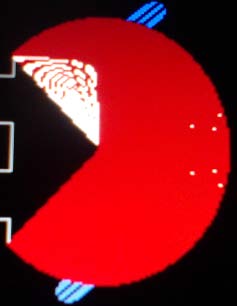
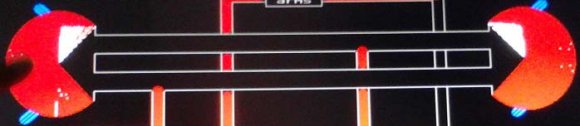
Some of the simulated results are presented here for quick reference. Figure 1 and Figure 2 are showing right and left lungs system with pulmonary artery and pulmonary veins. Figure 3 is showing pulmonary circulation. Pulmonary circulation is the movement of blood from the heart, to the lungs, and back to the heart again.In the present paper the blood circulation is animated and designed to set and reset the blood flow to tudy the heart functioning. The Deoxygenated blood (impure blood)leaves the heart, goes to the lungs and get oxygenated(pure blood), and then re-enters into the heart. The impure blood leaves through the right ventricle through the pulmonary artery. The pulmonary artery carries the impure blood to the capillaries. In capillaries carbon dioxide diffuses out from blood cell into, and oxygen disseminates into the blood. Blood leaves the capillaries to the pulmonary veinand that carries oxygen-rich blood in the body, to the heart, where it re-enters at the left atrium. From the right ventricle, blood is pumped through the pulmonary semilunar valve into the left and right pulmonary arteries and travels through the lungs. The pulmonary arteries carry deoxygenated blood to the lungs, where it releases carbon dioxide and pick up oxygen during respiration. The capillaries carry blood to all cells of the body. The oxygenated pure blood then leaves the lungs through pulmonary veins, which return it to the left heart, completing the pulmonary cycle. This blood then enters the left atriumthrough the left atrioventricular valve, into the left ventricle. The blood is then distributed to the body and again return back to the pulmonary circulation for oxygenation [13]. An ECG reflects the sequence of depolarization and repolarization over the chambers of the heart by connecting body-surface electrodes to chest skin. This electrical activity is related to the contraction and relaxation of the heart chambers. Electrodes measure the voltage between points on the body. A depolarization wavefront moving toward a positive electrode creates a positive deflection on the ECG in the respective lead. A depolarization wave front moving away from a positive electrode creates a negative deflection in the corresponding lead. A depolarization wavefront moving perpendicular to a positive electrode creates an equivalent phase wavefront [11].
5. P wave = atrial depolarization
The PR interval represents atrial depolarization to ventricular depolarization. This time lag allows atrial systole to occur, filling the ventricles before ventricular systole.
6. QRS complex = ventricular depolarization
The QRS interval represents the time it takes for ventricular depolarization.
7. T wave = ventricular repolarization
The QT interval represents the time of ventricular depolarization and repolarization. It is useful as a measure of repolarization and is influenced by electrolyte balance and medications [11].
8. V. Constraints
In former works many constraints are discussed as follows [4]. The facilitators must have virtuous methodological and constructive knowledge to handle the software and to create new designs. It is very much recommended to handle Information and Communication Technology(ICT) tools by a lecturer who has more than three years' experiencein a particular subject. So that it become very easy for the lecturer to interact with the technical content of the software. But it is not possible to have always experienced faculty. Sometimes faculty need extra training to handle such type ofgraphics tools [4]. Faculties may not showinterest to adapt the new system as they were very much acquainted with the old systemas they may not have good knowledge in handling computer software. And the management may not have interest to buy such type of ICT enabled tools. Influential person can show significantly effecton cost expenditure of the software and other related resources and maintenance. Researchers estimate that information and communication technology (ICT) is responsible for at least 2 percent of global greenhouse gas (GHG) emissions [8]. These problems can be overcome by making small modifications in ICT technologies. The cost of these modifications are very less when compared with the time wastage, pollution in older method.
9. VI. Conclusions
The ICT enabled methodologies improves the learning opportunities in broad categories. The simulator allows the user to create real time functionality and analysisof the organs. The software structure is very interactive, interesting and user friendly. There is no physical contact of the living body. The present software supports multiple simulations in single window where it canbe process large data sets through interfacing from the previous simulated results. The white marks in the image can be removed by applying noise removal algorithms. By further understanding and study the concepts and with little more efforts three dimensional animations can be done for more attractive output.The simulations are very useful to review and understanding the shape and internal operation of body parts of creatures.
10. Global Journal of

| 11. BME lab, yale university, staib/bme355/ecg/prep. | http://noodle.med.yale.edu/ htm | ear 2012 |
| Y |