Prevalence of Fasciola Infection in Slaughtered Animals in Kashmir

Table of contents

1. Introduction

uminant productivity around the world is majorily affected by trematode parasitism (Vercruysse and Claerebout 2001). Among them, Fasciolosis gains public concern not only due to its prevalence and economic significance to animal stock in all continents (Scheweizer et al., 2005, Mungube et al., 2006) but also to its zoonotic aspect. Bovine Fasciolosis is an impedent in profitable bovine farming and for butchers and consumers too. Parasite of genus Fasciola i.e Fasciola hepatica and Fasciola gigantica is the causative agent of Fasciolosis which occur in a wide range of definitive hosts. Over the last decade there has been a substantial increase in the number of fasciolosis cases recorded. It is spurred on by both environmental changes (warmer, wetter climate) and man-made modifications such as an increase in animal movements and intensification of livestock farming (Mas- Coma et al., 2005).

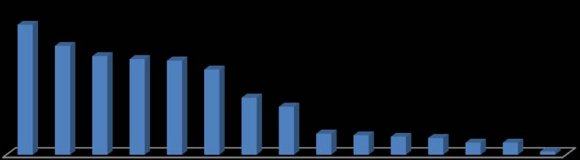
According to Annual Reports of Department of Animal Husbandry, Dairying and Fishries, species -wise incidence of Bovine Fasciolosis in India is tabulated as under: While comparing the apparent prevalence of liver fluke infection, detected by liver, faeces and bile examination it has been reported that examination of liver or bile samples was more sensitive than faecal examination (Braun et al., 1995 andKumar et al., 2002).Thus the abattoir study was carried out to determine the prevalence.

Note: Year

2. II. Material and Methods

A two-year prospective systematic sampling study was undertaken from January 2014 to January 2016 to determine the relative occurrence of Fasciola infection in the livers of cattle presented to six abattoirs across the Kashmir. Samples were taken from the three studied localities i.e., Hazratbal, Parimpoora, and Gouskimber of Srinagar district but sampling effort was more important in Parimpoora locality, where four slaughterhouses were closely located.

The sample size was calculated using the formula given by Thrustfield, M. (2005).

3. ?? = 1 96 2 1

Where n = required sample size P exp = expected prevalence= 50% d = desired absolute precision=5% Hence, d = 0.05 and p= 0.5 (50%).

The expected prevalence in the study area was 55 % (Akhoun and Peer, 2014). Thus the minimum desired annual sample size was calculated to 381. However, due to drastic floods only 316 cattle were examined in Year 2014 as collection areas were inaccessible and sample size was extended to 396 in Year 2015. The age of each animal was confirmed by looking at the physical appearance of body and examining the dental pad and incisor teeth (Cockrill, 1974). The data was collected according to predesigned proforma: Young (1Yr-3Yrs), adult (3-6Yrs) and aged (Above 6 years). During survey the gender and breed of animals was also recorded. ? Assessment of Body condition Body scoring of the cattle was made based on the method described by Nicholson and Butterworth (1986). Each scoring were given number from 1(L-, very lean) to 9 (F+, very fat) and these scores finally included under three body condition scores, good, medium and poor.

4. ? Season

On the basis of temperature and precipitation, four seasons in a year recognized in Kashmir valley are: winter (December to February); spring (March to May); summer (June to August); autumn (September to November) (Dar et al., 2002).

5. b) Postmortem examination ? Types of infection

Infection based on causative agent were classified as Fasciola hepatica, Fasciola gigantica, mixed Fasciola species (Fasciola hepatica, Fasciola gigantica) infection.

6. c) Postmortem fluke recovery

Worms were recovered from infected livers by squeezing them manually to macerate the parenchyma and the flukes were carefully removed and placed in petridish containing 0.15M Dubecco's PBS buffer (pH 7.3) for initial washing. The flukes were stored in collection vials containing PBS and were transported to the laboratory of Department of Zoology, University of Kashmir, Srinagar. Fasciolids were identified primarily on differences in body shape and size of the adults, with the smaller F. hepatica exhibiting wide and defined shoulders compared to the slender F. gigantica having less defined shoulders and shorter cephalic cones (Soulsby, 1986). For permanent slide preparation flukes were rapidly killed in 70% ethyl alcohol to avoid shrinkage. The flukes were then transferred to vials containing 6-10% formalin for preservation. Flukes were stained with Borax Carmine, dehydrated in ascending grades of ethanol, cleared in Xylene and mounted in Balsam Canada and viewed under monocular light microscope.

7. d) Data Analysis

Data was recorded, entered and managed into MS Excel work sheet and analyzed using Minitab Version 13.Prevalence was calculated as percentage of infected among the examined samples. Chi square test was employed to examine the effect of above mentioned epidemiological determinants on the level of parasitism in host. In all statistical analysis, confidence level was held at 95% and P-value is <0.05 (at 5% level of significance) was considered as significant.

8. IV. Results

Fasciolosis in an area is influenced by a multifactorial system which comprises both definitive and intermediate hosts, parasite and environmental effects. Numerous factors (both intrinsic and extrinsic) form an association posing a potential epidemiological threat and it is important that the existence and localization of such an association should be recognized beforehand so that the situation can be brought under control. Thus in this portion of result, these factors have be assessed and potential reason behind the association have been well documented

9. Overall Prevalence (Table 1)

The overall prevalence of Fasciolosis for the period of two years (2014-2015) was found to be 26.84% in the current study areas. In 2015, the percentage prevalence was higher (27.02%) than in 2014 (25.31%). There was an increase of 1.71% in prevalence rate from 2014 to 2015.But difference in prevalence rate was not statistically significant (p>0.05) as there was sampling error in year 2014 because of scarcity of data collection for a period of 2 months (September and October) due to Floods that affected the whole valley.

The result of current study indicated that Fasciolosis in cattle is spread relatively with moderate prevalence rate of 26.84% in the study area as compared to high prevalence of 51.42%,42.06% and Month-wise prevalence (Fig. 1)

The results revealed that the lowest prevalence of Fasciolosis for Year 2014 was in the month of May (14.2%) and highest being in the month of August (35.8%).However in Year 2015, the prevalence rate was highest in the month of September (44.66%) followed by October (39.66%) and lowest in May (9.3%). Moreover, the infection was reported throughout the year due to resistance of metacercariae for desiccation, especially during the dry season and continued presence of the shallow water, enough vegetation and humidity for continued exposure of the animals to encysted metacercariae and no restriction on cattle grazing habits and movement between the infected and treated localities which was also suggested by El Bahy, 1998.

These On seasonal basis, the current study showed maximum spread of disease in Autumn Season i.e. 33.33% and 40% in Year 2014 and 2015 respectively. The minimum infection was recorded in spring season showing prevalence of 20% and 12.9% in consecutive studied years. There was no statistically significant difference between seasons in year 2014 which has already been stated could be attributed to skipping the data of two months due to natural disaster Kashmir valley faced. However statistically significant difference was observed between seasons in year 2015. This difference could be due to a variety of weather condition in each year. The highest prevalence in autumn was also reported by Chaudhri et al. 1993

10. Distribution on the basis of infection type (Table 3)

Of the total 192 affected livers by fasciolosis, 149 (77.60%), 24 (12.5%) and 19 (9.89%) respectively showed Fasciola gigantica, Fasciola hepatica and mixed infection (Fasciola hepatica and Fasciola gigantica).

The finding of this study was in consistence with the earlier investigation by Ashrafi et al. 2004 Genderwise prevalence (Table 5) Out of 531 males and 183 females slaughtered during the survey period, males won by retaining lesser infection of 19.96% and were par to females who showed higher prevalence of 46.99%. The difference was highly significant and thus revealed sex as determinant influencing the prevalence of Fasciolosis rate. Our findings are in agreement with results of Daniel 1995; Molina et In the current studied abattoirs, the number of slaughtered male cattles (531) was far higher than the females (183). The number of positive females was higher in proportion than males even if the number of female cattle that come to abattoir were fewer in number. These results were in consistent to Kara et al. 2009. High infection rate in females can be multifactorial like high stress during parturition period (Spithill et al. 1999), weak and malnourished making them more susceptible to infection (Blood and Radostits, 2000) or due to the feeding conditions i.e females are generally being let loose to graze freely in pastures. The other possible reason for the same could be that the most of people traditionally feed their lactating cows with grasses during dry season which are grown around rivers and marshy areas for the sake of getting high milk yield as suggested by Gracy et al. 1999

11. Breedwise prevalence of Fasciolosis (Table7)

Out of the total 71 cattle examined, 213 were reared locally and 501 were imported from other states to the valley for slaughter purpose. The prevalence of fasciolosis was 40.80% and 20.90%for local and nonlocal breed cattle, respectively. There was statistically significant (? 2 = 29.06, P = 0.000) association of fasciolosis with breeds. Our results are in agreement with study conducted by Teklu et al. 2015. This diference in prevalence based on breed might be due to the management of the animals as most of the local animals were reared in the extensive system of management which makes them easily susceptible to the parasites

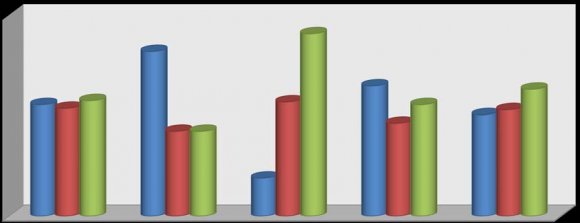
Figure 1. R
of Epidemiological Parametes a) Antimortem analysis ? Age, Gender and breed of animal
Figure 2. Pg 1 :
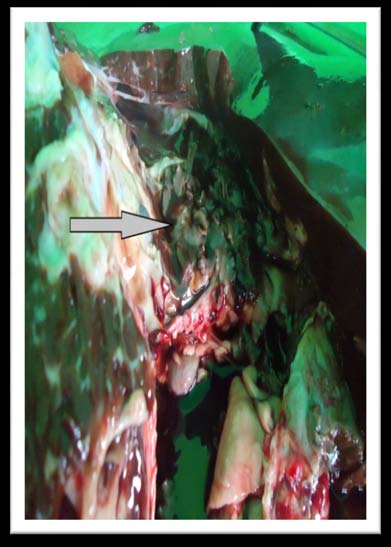
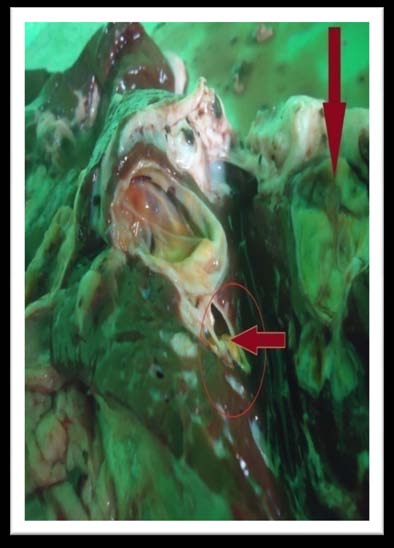
1Infected Liver Samples. (A) Bovine liver showing oozing parasite. (B, C) Parasites lying free and soaked in foul smelling fluid (D) Yellowish tissue
Figure 3.
Volume XVI Issue III Version IYear 2016 © 2016 Global Journals Inc. (US)
Figure 4. Figure 2 :
2Figure 2: Cumulative Season wise prevalence
Figure 5.
from Gilan province; Mir et al. 2008 from Kashmir and Khan et al. 2009 from Punjab Province (Pakistan) and by Phiri et al. 2005; Abunna et al. 2009; Fufa et al. 2009; Mwabonimana, et al. 2009. The predominance of Fasciola gigantica could be due to the availability of appropriate environmental conditions and topography (lowland and middle altitude zone) which are favorable habitat to its intermediate host L. natalensis (Urquhart et al. 1996).However, inverse distribution was reported by Melugeta et al. 2011; Belay et al. 2012; Chakiso, et al. 2014 and Alemu and Abebe 2015. Mixed infection of F.
Figure 6.
and F. gigantica occurs presumably as a result of the movement of stock between high and low ground or through overlapping of the territories of the snail vector at altitudinal range of 1200-1800 M.a.s.l.(Kendel  1954 andGraber, 1975).
Figure 7. Table 1 :
1
YEAR EX. INF. PREV ? 2 (P-Value)
2014 316 80 25.31% 0.183
2015 396 107 27.02% 0.669
Total 714 192 26.84%
Figure 8.
Year 2016
Volume XVI Issue III Version I ( D D D D ) 80 70 27.7 29.41% 36.5% 31.03%
60
50 40 30 34.2% 21.05% 25% 19.04% 10.34% 9.3% 20% 10.5% 24.13% 35.8% 44.66% 33.33% 39.66% 30.7% 2015 2014
20 25.6%
20.45% 16.12%
10 14.28%
0 NS NS
JAN FEB MAR APR MAY JUNE JULY AUG SEP. OCT. NOV. DEC.
Figure 1: Monthwise prevalence of Fasiolosis (2014-2015)
© 2 016 Global Journals Inc. (US)
Note: GSeason wise Prevalence (Tableand Fig 2)
Figure 9. Table 2 :
2
Year 2014 2015
Season Ex. Inf. Prev. Ex. Inf. Prev.
Spring 115 23 20% 82 10 12.9%
Summer 99 26 26.26% 102 20 19.6%
Autumn 12 4 33.33% 146 59 40%
Winter 90 27 30% 66 18 27.27%
Note: ? 2 (p-Value) 3.218(0.486) 25.26(0.000)
Figure 10. Table 3 :
3
Infection Type Infected Prev. Among Infected Ones (N=192) Overall Prevalence (N=714)
F. gigantica 149 77.60% 20.86%
F. hepatica 24 12.5% 3.361%
Mixed 19 9.89% 2.66%
?2 254.29(p=0.000) 186.22(p=0.000)
Age-wise distribution (Table4)
Out of 714 cattles, 166 heads were of age
group <1-3Years, 396 of age between 3-6 years and
152 having age >6 Years. Among these 3 age
categories, prevalence of Fasciolain livers was highest
in >3-6 years age group (30.30%) followed by age
group >6 years (28.28%) and least infection in bovines
of age 1
Figure 11. Table 4 :
4
Age Ex. Inf. Prevalence ? 2 p-Value
1Yr-3Yrs 166 29 17.46% 9.991
3Yrs-6Yrs 396 120 30.30% 0.007
>6Yrs 152 43 28.28%%
Figure 12.
Figure 13. Table 5 :
5
Examined Infected Prevalence
Males 531 106 19.96%
Females 183 86 46.99%
?2 (p-value) 49.221(0.000)
Association of body condition with infection (Table 6)
Among all examined animals (n = 714), 30.53%
(n = 218) were marked as poor (body score 1-3),
35.05% (n =250) as Medium (4-6) and 34.44% (n =
246) as Good (7-9) body conditions. 42.66% of infection
(n i
Figure 14. Table 6 :
6
Body Condition Ex. Inf. Prevalence ? 2 p-Value
Poor 218 93 42.66% 41.223
Medium 250 56 22.40% 0.000
Good 246 43 17.47%
Figure 15. Table 7 :
7
Year 2016
Volume XVI Issue III Version I
D D D D )
( G
Breed Ex. Inf. Prevalence ? 2 p-Value
Locals 213 87 40.80% 29.06 0.000
Non-locals 501 105 20.90%
© 2016 Global Journals Inc. (US)

Appendix A

  1. Fasciolosis: Prevalence, Evaluation of Floatation and Simple Sedimentation Diagnostic Techniques and Monetary Loss due to Liver Condemnation in Cattle Slaughtered at Wolaita Soddo Municipal Abattoir, Southern Ethiopia. Food Science and Quality Management, A Alemu , B Abebe . 2015. p. 43.
  2. Prevalence of bovine Fasciolosis in and around Inchini town, West Showa Zone, Ada'a Bega Woreda. A Assefa , Z Assefa , D Beyene , F Desissa . Centeral Ethiopia. J. Vet. Med. Anim. Health 2015. 7 (6) p. .
  3. Bovine fasciolosis: Carpological, abattoir survey and its economic impact due to liver condemnation at Soddo municipal abattoir, Southern Ethiopia. Tropical Animal Health Production, A Fufa , A Loma , M Bekele , R Alemayehu . 2009. 42 p. .
  4. Epidemiology and chemotherapy of fascioliasis in buffaloes. A Maqbool , M J Arshad , F Mahmood , A Hussain . Assiut. Vet. Med. J 1994. 30 p. .
  5. Epidemiology of fasciolosis in buffaloes under different managemental conditions. A Maqbool , C S Hayat , T Akhtar , H A Hashmi . Vet. arhiv 2002. 72 p. .
  6. Prevalence of Fasciolosis in Zambian Cattle Observed at Selected Abattoirs with Emphasis on Age, Sex and Origin. A M Phiri , I K Phiri , C S Sikasunge , J Monrad . J. Veterinary Medicine B 2005. 52 p. .
  7. Bovine fascioliasis in Nigeria. Intercurrent parasitic and bacterial infection. A Ogunrinade , G O Adegoke . Tropical Animal Health Production 1982. 14 p. .
  8. Fasciolosis Clinical occurrences, Coprological, Abattoir and Snail survey in and around Wolisso, A Rahmeto . 1992. Ethiopia. Faculty of Veterinary Medicine, Addis Ababa University, Debre Zeit (DVM thesis)
  9. Prevalence of cattle fluke's infection at Andassa Livestock Research Center in north-west of Ethiopia. Asressa Yeneneh , Hassen Kebede , Tewodros Fentahun , Mersha Chanie . Veterinary Research Forum 2012. 3 (2) p. .
  10. Seasonal and monthly prevalence pattern of fascioliasis in buffaloes and its relation to some climatic factors in north eastern areas of Punjab. A W Qureshi , A Tanveer , A Maqbool , S Niaz . Pakistan. Iranian Journal of Veterinary Research 2012. 13 (2) p. .
  11. Prevalence of fascioliasis in buffaloes under different agro-climatic areas of Sindh Province of Pakistan. B Bhutto , A Arijo , M S Phullan , A Rind . International Journal of Agricultural Biology 2012. 14 p. .
  12. On Farm Study of Bovine Fasciolosis in Lemo District and its economic loss due to liver condemnation at Hossana Municipal abattoir, Southern Ethiopia. B Chakiso , S Menkir , M Desta . Int.J. Curr.Microbiol.App.Sci 2014. 3 (4) p. .
  13. Bovine Fasciolosis: Prevalence and its Economic loss due to liver condemnation at Adwa Municipal Abattoir, North Ethiopia. School of Veterinary Medicine, College of Agriculture and Veterinary Medicine. B Mihreteab , T Haftom , G Yehenew . Jimma. Ethiopian Journal of Applied sciences and Technology 2010. 1 (1) p. .
  14. Epidemiology and control of trematode infections in cattle in Zimbabwe: a review. D M Pfukenyi , J Monrad , S Mukaratirwa . J. S. Afr. Vet. Assoc 2005a. 76 p. .
  15. Prevalence and Economic Losses of Bovine Fasciolosis in Dessie Municipal Abattoir, South Wollo Zone. E Belay , W Molla , A Amare . Ethiopia. European Journal of Biological Sciences 2012. 4 (2) p. .
  16. Prevalence of infection with fasciola gigantic and its relationship to carcase and liver weights and fluke and egg counts in slaughter cattle and buffaloes in Southern Mindanao, Phillippines. Tropical Animal Health Production, E C Molina , E A Gonzaga , L A Lumbae . 2005. 37 p. .
  17. Helminths, Arthropods and Protozoa of Domesticated Animals, 7th, Ejl Soulsby . 1986. London: Bailliere Tindall. p. .
  18. A crosssectional survey on fasciolosis in selected settlements of Taveta Division. E O Mungube , D M Sila , C W Kariuki , S M Bauni , B A Tenhagen , L Wamae , J Nginyi , G A Omondi . Livestock Research for Rural Development 2012. 24 (4) p. .
  19. Bovine Fasciolosis: Coprological, Abattoir Survey and its Economic Impact due to Liver Condemnation at Soddo Municipal Abattoir, Southern Ethiopia. Tropical Animal Health and Production, F Abunna , L Asfaw , A Megers , A Regassa . 2009. 42 p. .
  20. Economic importance of organs condemnation due to fasciolosis and hydatidosis in cattle and sheep slaughtered at Dire Dawa Abattoir, DVM thesis, F Daniel . 1995. Ethiopia. Faculty of Veterinary Medicine, Addis Ababa University Debre zeit
  21. Biodiversity of the Kashmir Himalaya, G H Dar , R C Bhagat , M A Khan . 2002. Srinagar -190006. Valley Book House. p. 19.
  22. Immunology of Fasciola hepatica infection. G Mulcahy , P Joyce , J P Dalton . Fasciolosis CAB International, J P Dalton (ed.) 1999. p. .
  23. Veterinary Parasitology. 2 nd edition. G M Urquhart , J Armour , J L Duncan , A M Dunn , F W Jennings . Blackwell Science Ltd., Osney Mead 1996.
  24. Seasonal prevalence of bovine Fascioliasis in Kashmir valley. G N Sheikh , G J Qadri , Gunjan Das . Indian Journal of Veterinary Medicine 2007. 27 (2) p. .
  25. Estimating the financial losses due to bovine fasciolosis in Switzerland. G Schweizer , U Braun , P Deplazes , P R Torgerson . Veterinary Record 2005. 157 p. .
  26. Abattoir prevalence of bovine fasciolosis in the manucipal abattoir of Wukro, Northern Ethiopia. H Teklu , Abebe , N Kumar . Journal of International Academic Research for Multidisciplinary 2015. 2 (12) p. .
  27. Prevalence of bovine fasciolosis and its associated risk factors in Mekelle municipal abattoir. H Tesfay , T Dejene , E Kebede . Journal of the Drylands 2012. p. .
  28. Epidemiology of Fasciola gigantica and paramphistomes in cattle on traditional, smallscale dairy and largescale dairy farms in the southern highlands of Tanzania. J D Keyyu , J Monrad , N C Kyvssgard , A A Kassuku . Tropical Animal Health and Production 2005. 37 p. 303314.
  29. Some Epidemiological Aspects of Fascioliasis among Cattle of Ladakh. J Ahmad , Hidayatullah Tak . Global Veterinaria 2011. 7 (4) p. .
  30. , J A Kuchai , M Z Chishti , M M Zaki , S A Dar . (Muzaffar Rasool)
  31. J Gracy , S David , Robert Collins , Huey . Meat Hygiene, (Harcourt Brace
    ) 1999. p. . (10 edition)
  32. Treatment vs non treatment of helminth infection in cattle defining the threshold. J Vercruysse , E Claerebout . Veterinary Parasitology 2001. 98 p. .
  33. Evidence Suggesting that Fasciola gigantica Might be the Most Prevalent Causal Agent of Fascioliasis in Northern Iran. K Ashrafi , Massoud 1, K Holakouei 2, M Mahmoodi 2 , M A Ma Joafshani 3 , Valero . Iranian J Publ Health 2004. 4 (4) p. . (MD Bargues)
  34. Paramphistomum daubneyi and F. hepatica: Influence of temperature changes on the shedding of cercariae from dually infected Lymnaea truncatula. M Abrous , D Rondelaud , G Dreyfuss , J Cabaret . Parasitol. Res 1999. 85 p. .
  35. Bovine fasciolosis: Prevalence and its economic loss due to liver condemnation at Adwa municipal abattoir, North Ethiopia. M Bekele , Haftom , G Yehenew . Ethiopian Journal of Agricultural Science and Technology 2010. 1 p. .
  36. Survey on Prevalence and Economic Significance of Bovine Fasciolosis in Debre Berhan region, M Dagne . 1994. Ethiopia. Faculty of Veterinary Medicine, Addis Ababa University, Debre Zeit (DVM Thesis)
  37. Helminth infection in livestock. M F Assanji . J. Helminthol 1988. 62 p. .
  38. Epidemiological Study of Fasciolosis in Cattle of Kashmir Valley. M Fatima , M Z Chishti , F Ahmad , B A Lone . Advances in Biological Research 2012. 6 (3) p. .
  39. Prevalence and Economic Significance of Bovine Fasciolosis in Slaughtered Cattle at Arusha Abattoir Tanzania. M F Mwabonimana , A A Kassuku , H A Ngowi , L S B Mellau , H E Nonga , E D Karimuribo . Tanzania Veterinary J 2009. 26 p. .
  40. Prevalence of zoonotic parasitic diseases of domestic animals in different abattoir of Comilla and Brahman Baria region in Bangladesh. M H B Kabir , M Eliyas , M A Hashem , Mohiuddin , O F Miazi . http://journals.sfu.ca/bd/index.php/UJZRU Univ.J.Zool.Rajshahu univ 2010. 28 p. .
  41. Bovine fasciolosis: Prevalence, effects of treatment on productivity and cost benefit analysis in five districts of, M K Khan , M S Sajid , M N Khan , Z Iqbal , M U Iqbal . 2009. Punjab, Pakistan. 87 p. . (Research in Veterinary Science)
  42. Helminths and helminthiasis of domestic and wild animals of Ethiopia. M M Graber . Bulutin Animal Health Production 1975. 23 p. .
  43. Comparison of Coprological and Postmoretem Examinations Techniques for the Deterimination of Prevalence and Economic Significance of Bovine Fasciolosis. M Nega , B Bogale , M Chanie , A Melaku , T Fentahun . Journal of Advanced Veterinary Research 2012. 2 p. .
  44. Veterinary Epidemiology.3 rd Edition, Black Well Science Ltd, M Thrustfield . 2005. Cambridge, USA. p. .
  45. The sensitivity and specificity of two methods for detecting Fasciola infection in cattle. N Anderson , T T Luong , N G Vo , K L Bui , P M Smooker , T W Spithill . Vet. Parasitol 1999. 83 p. .
  46. Strategic Control of Fascioliasis in Egypt. Review article. N M El-Bahy . Continual Scientific Committee of Pathology, Microbiology and Parasitology 1998.
  47. Prevalence of fascioliasis and efficacy of various anthelmintics in buffaloes of Rural Kathamandu vetcon, N P Ghirmire , N P S Karki . 1996. p. 43.
  48. A text book of the disease of cattle, sheep, goats, pigs and horse: Veterinary medicine, O M Radostitis , D C Blood , C C Gay . 1994. London, UK; Bailliere, Tindall. p. . (8th ed.)
  49. Faecal examination vis-àvis bile examination for the diagnosis of bubaline fasciolosis. Rajat Garg , C L Yadov . Journal of Veterinary Parasitology 2002. 16 p. .
  50. Seasonal prevalence of trematode parasites of sheep (Ovis aries L.) in Kashmir Valley. R A Mir , M Z Chishti , M A Zarger , H Tak , F A Dar . India. Nigerian Journal of Parasitology 2008. 29 (2) p. .
  51. Fasciolosis in beef cattle in North West Argentina. R H Dwinger , P D Leriche , G I Kuhne . Trop. Anim. Health Prod 1982. 14 p. .
  52. Prevalence and dynamics of natural infection with Fasciola hepatica (Linnaeus, 1758) in Brazilian cattles. Revue Méd. R N Faria , M C Cury , W S Lima . Vét 2005. 156 (2) p. .
  53. , S Affroze , N Begum , M S Islam , Rony .
  54. Risk Factors and Gross Pathology of Bovine Liver Fluke Infection at Netrokona District. S A Islam , M A Mondal , MM H . J. Anim. Sci. Adv 2013. 3 (2) p. .
  55. Fascioliasis in Pakistan. S B Kendall . Ann. Trop. Med. Parasitol 1954. 48 (3) p. .
  56. Prevalence of Bovine Fasciolosis and its economic significane in and around Assela. Shiferaw Mulugeta , Feyisa Begna , Ephrem Tsegaye . Ethiopia. Global Journals Inc 2011. 11 p. .
  57. Fascioliasis and other plant-borne trematode zoonoses. S Mas-Coma , M P Bargues , M A Valero . International Journal for Parasitology 2005. 35 p. .
  58. An epidemiological study of bovine fasciolosis in potohar region. Faculty of Sciences, S Mufti . 2011. Rawalpindi, Pakiston. Arid Agriculture University
  59. Prevalence of Bovine Fasciolosis and its Economic Significane in and Around Assela. S Mulugeta , F Begna , E Tsegaye . Ethiopia. Global Journal of Medical research 2011. 11 (3) .
  60. Epidemiology and control of Fasciola gigantica infection of cattle and buffaloes in Eastern Haryana. S S Chaudhri , R P Gupta , S Kumar , J Singh , A K Sangwan . India. Indian. J. Anin. Sci 1993. 63 p. .
  61. Slaughter house based epidemiology and estimation of economic losses of bovine Fascioliasis in Tehsil Sargodha. T U Rehman , M N Khan , M S Sajid , M T Javed . Pakistan Journal of Science 2013. 65 (4) .
  62. Fasciola gigantica: epidemiology, control, immunology and molecular biology, T W Spithill , P M Smooker , D B Copeman . 1999. Wallingford, Oxon, UK: CABI. p. .
  63. Diagnosis of liver flukes in cows-a coparison of the findings in the liver, in the faeces and in the bile. U Braun , R Wolfensberger , H Hertzberg . Schweizer Archiv for Tierheilkunde 1995. 137 (5) p. .
  64. , V Kumar , P S Banerjee . (Hira Ram)
  65. Dry season bovine fasciolosis in northwestern part of Ethiopia. Yilma Jabore , Mesfin Ali . Revue Medical Veterinary 2000. 151 (6) p. .
  66. Prevalence of fascioliasis in district Srinagar of Kashmir valley. Z A Akhoon , F U Peer . Vet. Sci. Res. J 2014. 5 (1&2) p. .
  67. Study on Prevalence of Bovine Fasciolosis at Nekemte Veterinary Clinic. Z Tilahun , D Nemomsa , K Haimanot , Girma . Oromia, Ethiopia. European Journal of Biological Sciences 2014. 6 (2) p. . East Wollega Zone
Date: 2016-01-15