1. Introduction
ormal voice is a key factor to maintain the standard quality of life. Dysphonia makes the patient isolated, which may induce his stress, anxiety, and depression [1]. There are four causes of dysphonia: 1. Inflammatory. 2. Structural or Neoplastic. 3. Neuromuscular. 4. Muscle tension dysphonia [2]. The assessment of singers, teachers, and other professional voice users, an understanding of their Occupational and voice requirements is essential [3] [4] [5]. Chronic laryngitis occurs due to upper and lowers respiratory tract infection gave the decision by Steel and McLoughlin in 1976 in their research paper [6]. Chronic laryngitis is directly related to occupations like excess noise at work [7], asbestos workers [8], cement workers [9], solvents and shoe workers [10]. The allergy is related to chronic laryngitis, which directly affects larynx and lung [11]. Gastro-esophageal (GERD) and laryngopharyngeal reflux (LPR) is one of the debating etiological factors of chronic laryngitis [12]. Candidal infection causes chronic laryngitis, usually seen in patients of post-irradiated, immune-compromise state, diabetes mellitus, after prolonged antibiotic administration [13]. Smoking is the key factor of chronic laryngitis [14]. MTD has multiple primary causes, includes 1. Stress, anxiety and depression. 2. Conversion disorder. 3. Poor vocal hygiene [15]. Laryngeal carcinoma is one of the commonest sites of malignancy which mainly affect men cause dysphonia [16]. A true vocal cord polyp arises from the free edge of vocal cord which size is greater than 03 mm [17]. Vocal cord nodules are small bilateral swelling less than 03 mm size, produce dysphonia and occur in student, teacher, singer, and leader [18]. Vocal cord paralysis is another prime cause of dysphonia, which may be iatrogenic and idiopathic, may be unilateral or bilateral [19]. Reinke's edema is chronically and irreversibly, polypoidal swelling of vocal cords, also known as smoker's larynx [20]. Leukoplakia, TB laryngitis, papilloma, ulcer, and cyst are minor causes of dysphonia.
2. II.
3. Methods and Materials
The study performed in two tertiary care hospitals. During the three years period, 116128 patients attended in the outpatient department of the Government Comilla Medical College Hospital, and 33840 in the Private Comilla Medical Centre, concern Clinic of Central Medical College, Comilla. Out of 149968, the laryngeal disarrayed patient was 1739. Firstly, the dysphonic patient consulted with the village doctor (Health Assistant) in the shop of the drug, and Community Health Worker (Government) working in the primary care preventive non-bedded hospital. Secondly, they consulted with the Graduate Doctor who works in the secondary care hospital named 50 bedded Upazilla Health Complex. The patient came to the tertiary care hospital after suffering from dysphonia from one month to one year. We performed the endoscopic assessment of all patients with rigid Hopkin's telescope (RTL). Some patient examined by traditional I/L and FOL. The patient and attended if the patient is children gave written informed consent about the examination procedure. The following information collected about the patient: Gender, age, personal history, occupation, residence, predisposing factor, presenting feature, investigation, disease pattern, and treatment option. Descriptive statistics used to calculate the data.
4. Results
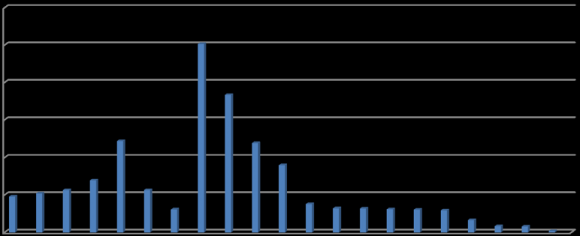
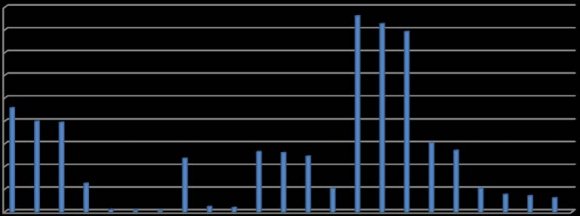
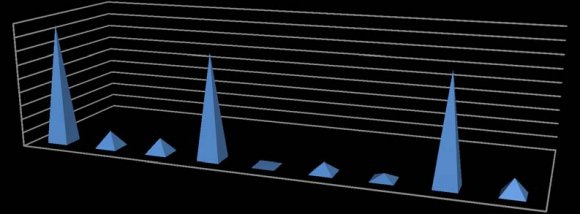
The incidence among outpatient was 1.16%, and the yearly prevalence of 33.33%. Among them, the male was 1006 (57.85%), and the female was 733 (42.15%) Figure- We also calculate the distribution of dysphonic disorders according to sex. Table - IV.
5. Discussion
In the present study, non-specific chronic laryngitis was the most common disease-producing dysphonia 1015 (58.37%) kept up by Khammas AH, Abodamen, and Kataria et al. series, reported the highest occurrence of chronic laryngitis accordingly 19.11%, 27.91% and 20.55% [22] [23] [24]. The patient was mostly male, 57.14 %, also supported by Goswami S et al. showed 62% patient was male [25]. About predisposing factors, allergic manifestation was the second most causes in our results 2.01% held up by Hamdan AL et al. also reported 15-25% singers to have dysphonia with allergic rhinitis [26]. Reflux originated Distribution of laryngeal pathology due to symptoms of dysphonia among our patient was seventeen hundreds thirty nine. Incidence of dysphonia was 1.16% among outpatient department and the yearly prevalence of 33.33 % in our study consistent with Roy et al. series, showed 30% prevalence rate [21]. Epidemiological Aspects of Dysphonia in Tertiary Care Hospital chronic laryngitis was 2.53% in our study against Jacob et al. showed 25% patient of chronic laryngitis was associated with reflux-related [27].
6. Medical Research
The second most common cause of dysphonia was functional or MTD in our work. Out of 417 (23.98%) MTD patients, the male was 238 (57.07%), and the female 179 (42.93%), opposite to Altman KW et al. series, they observed 60% were female and 40% male [15]. Personal history revealed in our work, previous radiotherapy was 19 (1.09%) and radioiodine ablation 13(0.75%) who suffered from anxiety, tension and mood disorder always about their future handicap supported by House A. et al. study showed one-third of functional dysphonic patients abide by anxiety and mood disorder [28].
The third most common cause malignant lesion was 5.17% in our paper persistent with Khammas AH and Kataria et al. study, reported third common cause was malignancy accordingly 16.9% and 11.67% [22] [24]. Kiakojoury K et al. also supported our research, showed laryngeal cancer caused dysphonia was 2.5% [29]. Smoking is the prime risk factor of our study 52.39%, supported by all other studies like Goswami S and Khammas AH et al. reported accordingly 100% and 53.68% [25] [22].
Vocal cord polyp was 3.79% dysphonia in our series against Goswami S et al. paper, showed 16.9% case [25]. Sex distribution in our study the male was 57.58%, and the female was 42.42% near to Singh R et al. research revealed male, the female ratio was 2:1 [30]. Vocal cord nodule was 55 (3.16%) in the present study isn't compatible with Babu VS et al. series, showed vocal nodule 11.95% [31]. The female was 72.73%, and the male 27.27% kept up by Goswami S et al. reported 67.86% was female, and 32.14% was male [25].
Vocal cord paralysis was 35 (2.01%) in our research consistent with Roy D et al. work, Presented a 2.9% case was paralysis [32]. Gender distribution displayed the female was 20 (58.82%), and the male 14 (41.18%)-, due to female thyroidectomy was 08 times more than male in our hospitals held up by Ko HC et al. series [33].
In our paper, 26 (1.49%) was a fungal infection in which the female was 21 (80.77%) and the male 05 (19.25%). It is associated with an immuno-compromised patients like post-irradiated, radioiodine ablation, frequently received antibiotics. In our work postirradiated 19 (1.09%) and radioiodine ablation 13 (0.75%) supported by Vrabec DP's study [13].
Reinke's edema was in our work 21 (1.27%) held up by Singh R et al. reported 2% whereas Goswami S et al. against our study showed 26.7% [30] [25]. Smoking (52.39%) was the main risk factor for Reinke's edema in our research kept up by Ballenger JJ. series [34].
Vocal cord leukoplakia is the premalignant condition. Among 04 (0.23%), the male was 03(75%), and the female 01 (25%) in this work. The risk factor for it in our report was smoking (52.39%) and voice abuse (26.97%) kept up by Sing R et al. series [30].
Laryngeal TB is secondary to pulmonary TB. Smoking (52.39%) is another risk factor held up by Chopra H et al. paper [35], reported 03 (4.48%) patients of laryngeal TB.
In our study, only 02 (0.12%) cases of adult papilloma whereas Goswami S showed JRRP patient was 11 (1.4%) [25].
The ulcer may be a premalignant condition or due to TB and Syphilis supported by Bhat VK et al. series [36].
Cyst of the epiglottis is a rare condition. Only one female patient found epiglottis cyst which was mucous retention cyst [2] V.
7. Conclusion
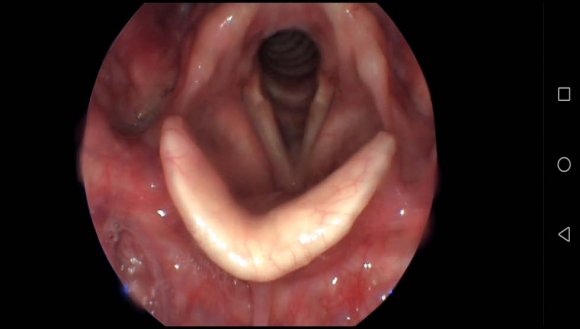
Dysphonia is one of the prime symptoms of the laryngeal disorder. The rigid RTL is available for accurate and safe examination, and assessment of the disease condition. Proper treatment and management can be reduced the morbidity and mortality rate of the patient suffering from various laryngeal diseases that causes dysphonia.

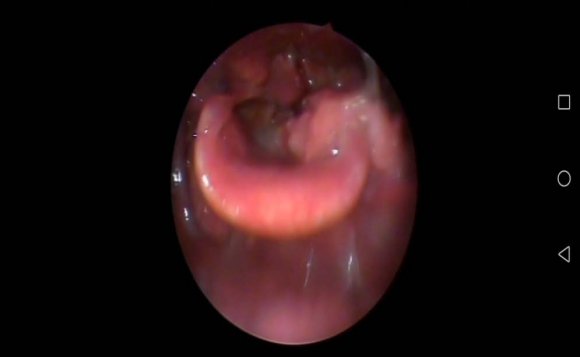
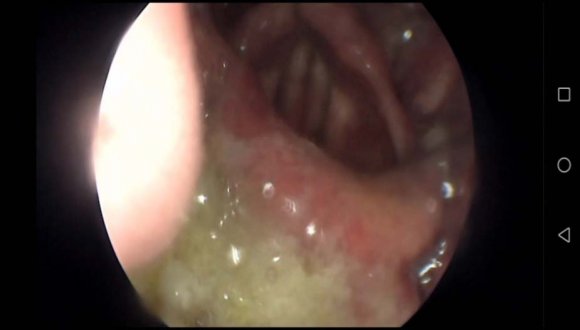
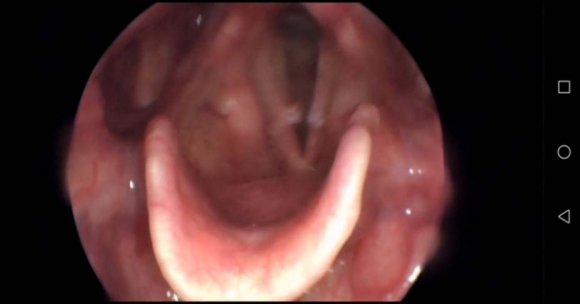
| 0 200 400 600 800 1000 1200 1400 1600 1800 | ||||||
| Serial Number 1 2 3 | Laryngeal Disorders Non-specific chronic laryngitis Dysphonia without structural change/Functional/MTD Malignant growth | Patient in Govt. hospital 420 230 69 | Patient in Private hospital 595 187 21 | Total patient 1015 417 90 | Percentage 58.37% 23.98% 5.17% | Volume XX Issue VIII Version I |
| 4 5 | Vocal cord polyp Vocal cord nodule | 61 38 | 05 17 | 66 55 | 3.79% 3.16% | D D D D ) |
| 6 | Vocal cord paralysis | 34 | 01 | 35 | 2.01% | ( |
| 7 8 9 10 11 12 13 | Candidiasis Reinke's edema Vocal cord leukoplakia Laryngeal TB Vocal cord Papilloma Vocal cord ulcer Cyst on epiglottis | 09 21 03 03 02 02 01 | 17 01 01 01 00 00 00 | 26 22 04 04 02 02 01 | 1.49% 1.27% 0.23% 0.23% 0.12% 0.12% 0.06% | Medical Research |
| T0tal | 893 | 846 | 1739 | 100% | ||
| Table-2: Distribution of laryngeal disorders according to sex. | ||||||
| Serial | Laryngeal disorders | Male | Percentage | Female | Percentage | |
| 1 | Chronic laryngitis (1015) | 580 | 57.14% | 435 | 42.86% | |
| 2 | Functional/MTD (417) | 238 | 57.07% | 179 | 42.93% | |
| 3 | Malignancy (90) | 88 | 97.78% | 02 | 2.22% | |
| 4 | Vocal cord polyp (66) | 38 | 57.58% | 28 | 42.42% | |
| 5 | Vocal nodule (55) | 15 | 27.27% | 40 | 72.73% | |
| 6 | Vocal paralysis (35) | 14 | 40% | 21 | 60% | |
| 7 | Candidiasis (26) | 05 | 19.23% | 21 | 80.77% | |
| 8 | Reinke's edema (22) | 18 | 81.82% | 04 | 18.18% | |
| 9 | Leukoplakia (04) | 03 | 75% | 01 | 25% | |
| 10 | TB laryngitis | 03 | 75% | 01 | 25% | |
| 11 | Vocal Papilloma (02) | 02 | 100% | 00 | 00% | |
| 12 | Vocal Ulcer (02) | 02 | 100% | 00 | 00% | |
| 13 | Cyst (01) | 00 | 00% | 01 | 100% | |
| Total | 1739 | 1006 | 57.85% | 733 | 42.15% | |
| Serial | No. of patient | Laryngeal disorders | Smoking | Voice abuser | Alcohol | Betel leaf | Allergic disorder | Reflux related | |
| 1 | 1015 | Chronic laryngitis | 494 | 302 | 00 | 190 | 20 | 09 | 00 |
| 2 | 417 | Functional | 252 | 102 | 00 | 32 | 12 | 19 | 00 |
| 3 | 90 | Malignancy | 88 | 00 | 00 | 02 | 00 | 00 | 00 |
| 4 | 66 | Vocal polyp | 30 | 18 | 00 | 10 | 00 | 08 | 00 |
| 5 | 55 | Vocal nodule | 10 | 35 | 05 | 00 | 00 | 05 | 00 |
| 6 | 35 | Vocal paralysis | 10 | 00 | 05 | 00 | 00 | 00 | 20 |
| 7 | 26 | Candidiasis | 00 | 05 | 00 | 15 | 03 | 03 | 00 |
| 8 | 22 | Reinke's edema | 17 | 04 | 01 | 00 | 00 | 00 | 00 |
| 9 | 04 | Leukoplakia | 03 | 01 | 00 | 00 | 00 | 00 | 00 |
| 10 | 04 | TB Laryngitis | 03 | 01 | 00 | 00 | 00 | 00 | 00 |
| 11 | 02 | Papilloma | 02 | 00 | 00 | 00 | 00 | 00 | 00 |
| 12 | 02 | Ulcer | 02 | 00 | 00 | 00 | 00 | 00 | 00 |
| 13 | 01 | cyst | 00 | 01 | 00 | 00 | 00 | 00 | 00 |
| Total | 1739 | 911 | 469 | 11 | 249 | 35 | 44 | 20 | |
| 100% | 52.39% | 26.97% | 0.63% | 14.32% | 2.01% | 2.53% | 1.15% |