1. I. Introduction
oiter uses to describe as a generalized enlargement of the thyroid gland. Iodine deficiency is the leading cause of goiter in the world [1]. Goiter may be present from the third and fourth decade of life and may cause dysphagia and obstructive symptoms. In children, it may cause mental retardation and neonatal cretinism [2]. Nutritional International (NI) works with universal salt iodization in Bangladesh from 2000 and work is ongoing. The Wickham survey observed 15% of people existing with goiter in the iodine-exuberant area, and 7% of people attended with visible goiter [3]. Higher frequency of goiter found in women and the elderly [4]. Euthyroid glandular enlargement may be diffuse or nodular. The thyroid malignancy accounts for 1% of all other new malignancies [5]. Differentiated thyroid cancer papillary represents 72%-85%, and follicular 10-20% of all thyroid cancers, medullary 1.7-35%, anaplastic less than 1% and other carcinoma 1-4% [6]. Women are 5-10 times greater prevalence of nodular goiter, and cancer prevalence 1.5% in women, which comprises 0.5% in men [7]. The majority of patients remain asymptomatic, but sometime 30-80% patients may complain of dysphagia and dyspnoea [8]. Diagnosis of thyroid swelling confirmed by history, clinical examination and investigation, and even suspected cancer in some instances [9]. Initial laboratory investigation is FT 4 , FT 3 , and TSH of patients with thyroid swelling advocated by ATA and BTA [10]. Diagnostic imaging includes highresolution ultrasonography (USG), CT, MRI in which USG routinely uses for evaluation of thyroid nodule [11]. FNAB or FNAC (Fine Needle Aspiration Biopsy or Cytology) is the gold-standard investigation to the diagnosis of benign or malignant nodular goiter except follicular adenoma with carcinoma due to capsular and vascular invasion depends on histological criteria, and allowing accurate cell collection through USG guidance [12]. Preoperative laryngeal examination by FOL or RTL should complete on all patients [13]. Upon the principles of Kocker's surgical technique, usually practiced surgery was hemithyroidectomy, near-total thyroidectomy or Dunhill's thyroidectomy (NTT), total thyroidectomy (TT) with or without neck dissection (ND) [14]. The leading complications of surgery are injury to the external branch of the superior laryngeal nerve (EBSLN), RLN, and the parathyroid glands [15] [16] [17]. Intraoperative neural monitoring (IONM) device is available in the developed country to save the nerve where it routinely used in total thyroidectomy and neck dissection [18]. If the parathyroid gland dissected, the sample collected and sent for frozen section analysis; if the parathyroid gland it should be implanted in sternomastoid muscle after sectioning it around 12 pieces [17].
2. II. Methods and Materials
The study performed in two tertiary care hospitals.
3. III. Results
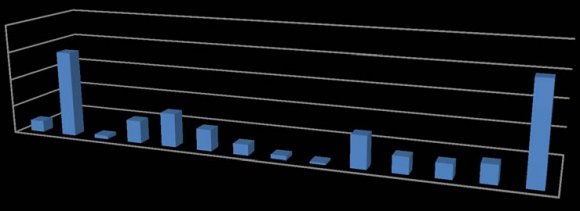
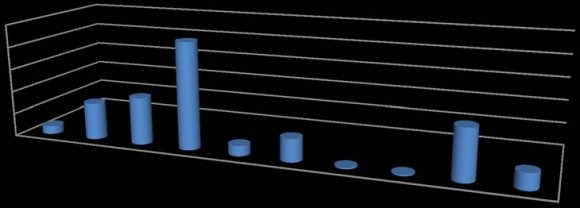
Incidence among outpatient was 0.12% and yearly prevalence of 33.34%. Out of 173, the male was 20 (11.56%), and the female 153 (88.44%), 0-9 years patient was nil, 10-19 years were 06 (3.47%), 20 Hemorrhage after a thyroid surgery is medical emergency because it created tension hematoma of the neck, causing respiratory distress. The patient immediately transferred to operation theatre and removed all layers of the wound after stitch cutting-one patient's bleeding from a punctured anterior jugular vein and another from thyroid vein. We properly secured the bleeding point stitching by 2/0 vicryl. Five patients had a subcutaneous hematoma. We off one or two stitches, evacuate the collection and applied pressure bandage. One patient suffered wound infection, and we cut the stitch like hematoma, evacuate the pus, and change the antibiotic according to culture and sensitivity test. One patient came with a keloid on incision the line. We excised the keloid, and after wound healing, gave the Injection steroid in the lesion every fifteen days for three months. 35 unilateral RLN paralysis patients treated medically by steroid, multivitamin, and combination of B 1 (Thiamine), B 6 (Pyridoxin), and B 12 (Cyanocobalamine). Thirty-two patients improved, and rest 03 gave Injection augmentation through the surgical procedure under general anesthesia. Two patients suffered bilateral RLN paralysis treated surgically by cordectomy. Temporary hypoparathyroidism diagnosed by Trousseau's sign or tetany. We added Tablet Rocal-D which contain calcium carbonate USP 1250 mg with equivalent to 500 elemental calcium, vitamin D 3 (cholecalciferol) USP 200 IU, two tablets three times daily, and Tab Sun D (Cholecalciferol) 1000 IU, one tablet two times daily after the postoperative period, and continued, for six months
4. IV. Discussion
Goiter or thyroid swelling is mention when it exceeds the normal volume, which is 25 ml for men and 18 ml for women. The incidence of thyroid swelling among outpatient in our study was 0.12%, and the yearly prevalence of 33.34%. Ansar MAJ reported clinically evident thyroid prevalence was 10%, and subclinical hypo and hyperthyroidism was 10%, total 20% prevalence in Bangladesh, which is near to our work [19]. Weigle et al. also described 3.95% of Indian people suffering from thyroid origin disease, which is near to all Asian countries like Bangladesh [20]. Volzke et al. study showed that the prevalence was 35.9% in the endemic iodine deficiency area than the nonendemic area consistent with our research [21].
Considering gender epidemiology, females were predominant in our study showed females, males ratio has gaps in 7.65: 1 supported by Altaf et al. study represented 5.49:1 female, male ratio, and Vanderpump MPJ study reported a higher prevalence in females [22] [23]. Hegedus et al. work also held up our result exhibited frequency higher in the elderly and female [4]. Hu et al. study showed female, the male ratio was 6.79: 1carried out of our paper [24].
Regarding age, in our work displayed maximum age incidence was 3 rd to 5 th decade, age range 17-75 years and mean age 39.22 years consistent with Rajkhowa et al. series, reported maximum age incidence was 3 rd to 4 th decade [25]. Hu et al. study showed the mean age was 52 years and the age range 9-87 years against our presentation [24]. About personal history, in the present study, 32.95% of patient came from iodine-deficient endemic zone, which was the most common cause of hypothyroidism and goiter worldwide supported by Delange et al. [26]. 100% of patient in our series had goitrogenic food habits contain thiocyanate, drugs such as paraaminosalicylic (PAS) acid and antithyroid drugs interfere with the oxidation of iodide and binding of iodine to tyrosin. A large amount of iodides are goitrogenic [27]. Smoker (29), diabetic (26), and hypertensive (33) patients need and gave especial attention during anesthesia, operation, and postoperative period.
5. Year
6. Global
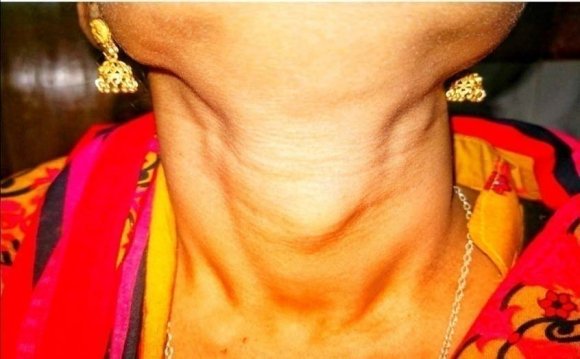
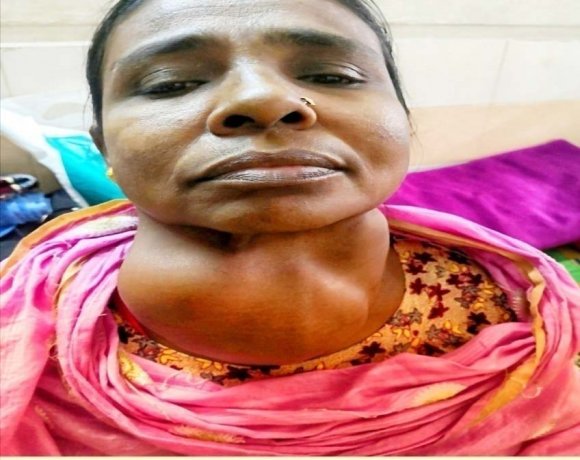
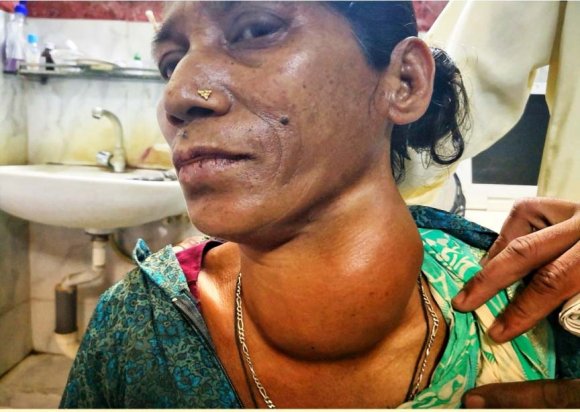
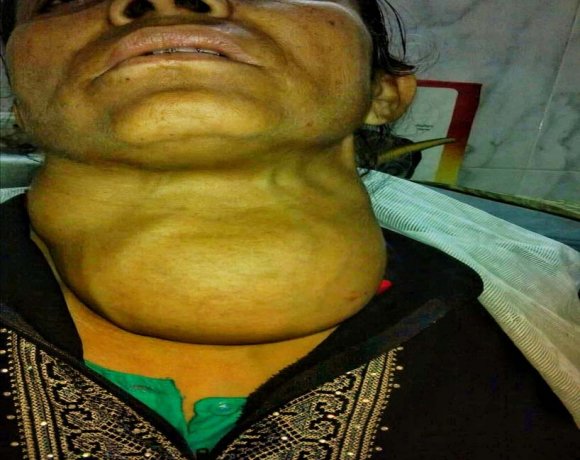
The presenting features are important for preoperative assessment and giving the proper direction on how to approach the surgical procedure supported by Chen et al. study [28]. The present study showed asymptomatic invisible or visible swelling was 100%, dysphagia, and dyspnoea 17.92%, and difficulty to wear necklace 13.29% held up by Shin and Stang et al. exhibited dysphagia to solid foods, globus sensation and dyspnoea [29] [30]. According to WHO, grade-1 a was 4.05%, grade-1 b 18.50%, grade-2 23.70%, and grade-3 53.75% near to Chen et al. paper [28].
About the investigation serum FT 3 , FT 4 , and TSH determination is an essential first step of investigation to know the functional status of goiter, whether it is hypo, hyper, or euthyroid, to take medical or surgical decision held up by Chen et al. paper [28]. Serum calcitonin measurement is one of the indicators of medullary carcinoma kept up by Toledo et al. work [31]. To assess any kind of thyroid swelling high-resolution USG, and USG guided FNAB or FNAC is benchmark procedure to give the features of microcalcification, irregular margin, hypoechogenicity, extrathyroidal extension, hypervascularity, and abnormal lymph node carried out by Radecki and Fish et al. research [32] [33]. CT scan and MRI help to detect the nodal disease, irregular borders or microcalcification, and tracheal compression kept up by Cooper et al. presentation [34]. If any suspicion of malignancy intravenous contrast should avoid which delay the RAI treatment carried out by Leung et al. paper [35]. FNAC or FNAB has excellent patient compliance, and diagnosis including colloid nodules, thyroiditis, papillary carcinoma, medullary carcinoma, anaplastic carcinoma, and lymphoma except follicular adenoma and follicular carcinoma not due to cytological but histological characteristics of capsular and vascular invasion kept up by Cibas et al. study [36]. Preoperative laryngoscopy is essential to assess the vocal cord mobility is normal or restricted due to invasion of RLN by thyroid malignancy held up by Randolph et al. work [37].
Disease pattern showed euthyroid benign goiter was 142 (82.08%) and euthyroid malignant goiter 31(17.92%) near to Pacini et al. study showed the incidence of malignancy of thyroid swelling was 10% Thyroid malignancy in our study showed papillary carcinoma was 93.54%, follicular carcinoma 3.23%, and medullary carcinoma 3.23% near with Altaf et al. work showed papillary was 83.1%, medullary 9.9%, and follicular 6.9% [22]. Plauche and Al-Salamah et al. also exhibited papillary carcinoma was highest of all other thyroid malignancy 57-89% consistent with our study [39] [40].
The surgical procedure revealed in our study hemithyroidectomy 78.61%, total thyroidectomy 20.23%, completion thyroidectomy 1.16 %, and selective neck dissection (SND) performed in two patients, one with total thyroidectomy, and another with completion thyroidectomy. We did hemithyroidectomy, 136 patients, in which nodular goiter was 104, MNG 14, follicular adenoma 13, and low-risk papillary carcinoma 05. About nodular goiter, MNG (Clinically one side was micronodular), and follicular adenoma (one lobe), hemithyroidectomy was perfect operation supported by Mehanna and Kandil et al. study [41] [42]. Hemithyroidectomy of low-risk papillary carcinoma needs long term to follow up essential to understanding the patient carried out by Udelsman and Shrime et al. work [43] [44]. We did total thyroidectomy 35 patients in which MNG was 11, papillary carcinoma 22, follicular carcinoma 01, and medullary carcinoma 01consistent with Bron and Udelsman et al. study [45] [46]. We did completion thyroidectomy for two patients in which one patient was incidental diagnosis of high-risk papillary carcinoma with tumor size >4 cm and age >55 years. Another case of low-risk papillary carcinoma, in follow up she presented with lymph node metastasis need completion thyroidectomy with selective neck dissection to provide adjunct RAI ablation carried out by Barney and Simo et al. [47] [48].
About postoperative complications in the present study showed hemorrhage was 02 (1.16%), hematoma 05(2.89%), wound infection 01 (0.58%), keloid 01(0.58%), temporary/unilateral RLN paralysis 35 (20.23%), permanent/bilateral RLN paralysis 02 (1.16%), and temporary hypoparathyroidism 12 (6.93%) near to Ignjatovic and Derby et al. series [49] [50]. IONM was not available in our surgical set up due to the high cost, and the maximum of our patients came from the poor class held up by Al-Qurayshi et al. paper [51].
7. V. Conclusion
Thyroid operation is now a regular procedure for surgeon and should maintain some rules and regulations. The informed written consent from the patient and attendant should include before thyroidectomy. The potential complications discussed [38]. Out of benign goiter, nodular was 73.24%, MNG 17.61%, and follicular adenoma 9.15% against our work by Vanderpump MPJ, and Altaf et al. study showed MNG was 37.3%, nodular goiter 23.2% [23] [22].
with the patient, and the probable surgical option disclose for the patient preferences. After the selection of the patient for thyroidectomy, all investigation should complete to diagnose the swelling is benign or malignant. If malignant swelling, carefully find out the staging of the malignant tumor to select the operational procedure. Thyroid surgery is a team work for surgeons and assistants to attain successful thyroid surgery without any complications.
8. Year
9. Global
| The operation performed hemithyroidectomy |
| was 136 (78.61%), total thyroidectomy 35 (20.23%), |
| completion thyroidectomy 02 (1.16%), and selective |
| neck dissection two, one with total thyroidectomy and |
| another with completion thyroidectomy. Postoperative |
| complications showed hemorrhage was 02 (1.16%), |
| hematoma 05 (2.89%), wound infection 01(0.58%), |
| keloid 01 (0.58%), RLN paralysis temporary/unilateral 35 |
| (20.23%), permanent/bilateral paralysis 02 (1.16%), and |
| temporary hypoparathyroidism 12 (6.93%). Management |
| of complication exhibited 47 (81.03%) treated |
| conservatively, and 11 (18.97%) surgically. |
| -29 |
| years 40 (23.12%), 30-39 years 60 (34.68%), 40-49 years |
| 38 (21.97%), 50-59 years 19 (10.98%), 60-69 years 07 |
| (4.05%), and above 70 years 03 (1.73%), age range 17- |
| 75 years, mean age 39.22 and the standard deviation |
| 12.275. Personal history revealed patient from endemic |
| zone was 57 (32.95%), non-endemic zone 116 (67.05%), |
| smoker 29 (16.76%), non-smoker 144 (83,24%), diabetic |
| 26 (15.03%), non-diabetic 147 (84.97%), hypertensive 33 |
| (19.08%), non-hypertensive 140 (80.92%), and |
| goitrogenic food habit like onions, carrots, sweet potato, |
| radishes, cauliflower, cabbage, kale and turnips was |
| 173 (100%). Presenting features showed asymptomatic |
| invisible or visible swelling (40ml or greater size) was |
| 173 (100%), dysphagia and dyspnoea 31(17.92%), |
| difficulties to wear necklaces 23 (13.29%), signs of |
| Serial Disease | Number of patient | percentage HT Right | HT Left | CT | TT SND | |||||
| 1. | Benign Goiter | 142 | 82.08% | 00 | 00 | 00 | 00 | 00 | ||
| 1.1 | Nodular | 104 | 73..24% | 63 | 41 | 00 | 00 | 00 | ||
| 1.2 | MNG | 25 | 17.61% | 09 | 05 | 00 | 11 | 00 | ||
| 1.3 | Follicular Adenoma | 13 | 9.15% | 06 | 07 | |||||
| 2. | Malignant Goiter | 31 | 17.92% | 00 | 00 | 00 | 00 | 00 | ||
| 2.1 | Papillary carcinoma | 29 | 93.54% | 02 | 03 | 02 | 22 | 02 | ||
| 2.2 | Follicular carcinoma | 01 | 3.23% | 00 | 00 | 00 | 01 | 00 | ||
| 2.3 | Medullary carcinoma | 01 | 3.23% | 00 | 00 | 00 | 01 | 00 | ||
| Total | 173 | 100% | 80 | 56 | 02 | 35 | 02 | |||
| Table-2: Postoperative complications. | ||||||||||
| Serial | Complication | HT | TT+-SND | CT+-SND | Total | Percentage | ||||
| 1. | Hemorrhage | 01 | 01 | 00 | 02 | 1.16% | ||||
| 2. | Hematoma | 03 | 02 | 00 | 05 | 2.89% | ||||
| 3. | Wound infection | 00 | 01 | 00 | 01 | 0.58% | ||||
| 4. | Keloid | 01 | 00 | 00 | 01 | 0.58% | ||||
| 5. | RLN paralysis | |||||||||
| 5.1 | Temporary/ Unilateral | 20 | 15 | 00 | 35 | 20.23% | ||||
| 5.2 | Permanent/ Bilateral | 00 | 01 | O1 | 02 | 1.16% | ||||
| 5.3 | Total | 20 | 16 | 01 | 37 | 21.39% | ||||
| 6 | Hyoparathyroidism | |||||||||
| 6.1 | Temporary | 00 | 11 | 01 | 12 | 6.93% | ||||
| 6.2 | Permanent | 00 | 00 | 00 | 00 | 00 | ||||
| Total | 25 | 31 | 02 | 58 | 33.53% | |||||