1. Introduction
n the world of material science, 'composites' are those types of materials that are prepared employing two or more substances -termed as matrix and reinforcement substances, which show distinct properties at the macro level, but upon combination yield materials with behaviours/ properties unlike those of the components arising from their synergism. What was envisioned and predicted in the 1960s by the physicist Richard Feynman about nanotechnology is now seeing a new era in the material science in the form of nanocomposites. A Nanocomposite is a framework for nanoparticles that are incorporated to improve a specific property of the material. In the present era, the perception of acquiring design uniqueness and property combinations that are not found in conventional composites, are obtained by using nanocomposites. Nanocomposites can be developed from a versatile materials from polymers to bacterial celluloses and nanoparticles. The applications of nanocomposites are overwhelming and encompass engineering sectors, health care, environmental protection to name a few.
The market value for nanocomposite materials is projected to grow from USD 4.1 billion in 2019 to USD 8.5 billion, by 2024 1 . Extensive research too is being carried out on the materials and the applicability of the nanocomposites, thus making them to have a significant impact on the global economy.
2. II.
3. Classification
Over the decades, progresses in the nanocomposites have been extensive. They have been made from different kinds of materials. The nanocomposites may be classified on the following basis:-2 i. Based on the source/origin 1. Natural Nanocomposites 2. Synthetic Nanocomposites ii. Based on the filler particle dimension 1. Three dimensional nanocomposites 2. Two dimensional nanocomposites 3. One dimension nanocomposite iii. Based on the matrix 1. Ceramic based nanocomposites 2. Metal based nanocomposites 3. Polymer based nanocomposites 4. Elastomeric nanocomposites 5. Dendrimer nanocomposites 6. Bionanocomposites i. Based on the source/origin:a. Natural Nanocomposites:-They are materials occurring in nature like bone and wood. The components include organic substance for eg. cellulose, chitin, collagen, and proteoglycans, and mineral phases like calcium carbonate, hydroxyapatite, and silica. Bone for example is an organic-inorganic mixture of with collagen as the organic substance and hydroxyapatite as the inorganic counterpart. b. Synthetic Nanocomposites:-In the last three decades, endeavors were made for the creation of artificial nanocomposites. Thus these come under the class of synthetic nanocomposites. Eg. Metal and ceramic nanocomposites. Others include polymeric and elastomeric systems. Research continues in artificial ceramics, polymers and their composites to provide microstructure almost like those of biomaterials. 2 The synthetic nanocomposites are discussed further under the classification based on the matrix substance.
4. I
In this sort of composites, ceramic makes up the fundamental piece of volume, for example, a compound of oxides, bromides, nitrides, and silicides. As a rule, the sophomore part of nanocomposites involves metal. Examples of ceramics incorporated are: -Al 2 O 3 /SiO 2 , Al 2 O 3 / SiC, Al 2 O 3 / CNT, Al 2 O 3 /TiO 2 , SiO 2 /Ni. Typically the two segments (metal and ceramic) are finely scattered in one another to evoke specific nanoscopic properties. These blends develop their optical, corrosion resistance, electrical, magnetic properties, including tribological and protective properties. The ceramic matrix consists of Aluminum oxide (Al 2 O 3 ) or Silica carbide (SiC) framework. After the addition of a low amount of (about 10%) silica carbide particles of suitable size and hot pressing, the aluminum oxide lattice gets fortified. Numerous techniques have been developed for the fabrication of ceramic matrix nanocomposites. 3 They include combining reinforcement with the powdered matrix followed by pressing, slurry processes, and vapor deposition methods. Computer-Mediated Communication (CMC) scanning may be used in medical devices, implants, structural loading components, surfaces for wear or friction, automobile, aerospace, and power generation applications (engines, turbines, etc.). The merits of ceramic nanocomposites are their improved mechanical properties, thermal stability, flame retarding nature, higher chemical resistance and high electrical conductivity. The demerits are that due to the high processing temperature manufacturing is complex, and hence, the processing is expensive; they are susceptible to thermal cracking.
ii. Based on the filler particle dimension:-A particle is a three dimensional entity. Like any other nanosystem, nanocomposites too can be classified based on number of dimensions of the particle that are within the nanometer range. There are three types.
1. Three dimensional nanocomposites or Isodimensional nanocomposites When all the three dimensions of a particle fall in the range of nanometers, they are called isodimensional nanoparticles. Spherical silica particles obtained by in-situ sol-gel methods are isodimensional.
5. Two dimensional nanocomposites
For a nanocomposite, when two of its dimensions are in the order of a nanometer scale while the third is larger, it leads to formation of elongated structures like nanotubes and whiskers. E.g. Carbon nanotubes (CNT) and polysaccharide whiskers are two dimensional nanoparticles.
6. One dimensional nanocomposite
For a particle, if there is only one dimension in the nanometer range, while the others are in larger dimensions, the filler is in the form of sheets. E.g. Polymer-layered nanocomposite crystal. These materials are almost exclusively produced by the intercalation of a polymer (or a monomer subsequently polymerized) within the collection of layered host crystals. 2 iii. Based on the matrix:-1. Ceramic based nanocomposites
7. Metal based nanocomposites
Metal matrix nanocomposites (MMNC) allude to substances composed of malleable metal or alloy matrix in which such nanosized strengthening substances are structured in the form of a sphere i.e., fullerene, tube, i.e. CNT and sheet, i.e. graphene. Due to their excellent mechanical properties and chemical stability, the interest in reinforcing MMNCs with nano-Carbon (nano-C) materials has developed rapidly. Both metal and ceramic features are combined. 5 Example of metals used are:-Fe-Cr/Al 2 O 3 , Ni/Al 2 O 3 , Co/Cr, Fe/MgO, Al/CNT, Mg/CNT. 3 While synthesizing metal nanoparticles, nanofluids made of metals, thin-film with metal nanoparticles and polymers are used. Polymers act as reducing agents, capping agents, and suspending agents during the preparation. They also can be used as a substrate or binders for metal nanoparticles. 2 Metal nanocomposites are applied in solar cells, and conductivity improved electronic circuits, sensors, and biosensors especially for sensing of viruses and malignant growth molecules. Versatile utility is evident from the work on polymer-metal nanocomposites.
When Cu/Ag nanoparticles are incorporated into polymers like polyvinyl alcohol, improvement in antibacterial properties can be seen. 6 The merits of metal nanocomposites are their higher strength density and higher modulus density. While the demerits are higher cost of some physical systems, and complicated fabrication methods for fiber reinforced system. 7
8. Polymeric matrix composites
Polymer matrix composites (PMCs) contain a blend of continuous or short strands of fibers bound together by the natural polymer matrix. Examples of Polymers incorporated are:-Thermoplastic/thermoset, polymer/layered silicates, polyester/Titanium dioxide (TiO 2 ), polymer/CNT, polymer/layered double hydroxides. 3 Reinforced plastics and advanced composites are the two categories of polymer matrix composites.
When contrasted with metal nanocomposites, they embrace many fascinating properties such as superior corrosion and exhaust resistance. Most advanced PMCs nowadays are made by a laborious method known as lay-up. The synthesis of polymeric matrix composites involves placing sequential layers of impregnated polymer fiber tapes on a mold surface, followed by heating to cure the lay-up into the associated integrated structure. 8 The merits of polymer nanocomposites are superior mechanical properties, promising electrical conductivity, noise damping, corrosion resistance, low permeability of fluids, light weight, low filler content, and ease of There are classified into four types based on their reinforcements:- 10 i. Nanoclay-reinforced nanocomposites:ii. Carbon nanotube-reinforced nanocomposites:iii. Nanofiber-reinforced nanocomposites:iv. Inorganic particle-reinforced nanocomposites:i. Nanoclay -reinforced nanocomposites In recent years, research has been directed from the microcomposites towards clay polymer nanocomposites. 11 Nanocomposites show improved mechanical, electrical, and thermal properties compared to the bulk materials and composites that are reinforced with micro-sized particles and fibers. Typical materials classified in this category have at least one dimension measuring smaller than 100 nm. Clay being a natural mineral, it is being used in fabrication as it is cheap and abundantly available. During synthesis, reinforcement of clay nanocomposites with two dimensions at two varied length scales can be acquired with microfibers or particles to obtain hybrid composites. Functional properties, for example, thermal or electrical conductivity, can be achieved additionally with high mechanical properties. Muscovite, phlogopite, smetics are some clay minerals. Epoxy, polystyrene, polypropylene, polyurethane, nylon, and polyethylene are commonly used polymers as a matrix for clay/polymer nanocomposites. The merits of claypolymer nanocomposites are high tensile strength, flexural, and thermal properties. While the demerits are that homogenous dispersion is hard to achieve in nanoclays. The density of nanoclay is higher than the polymer matrix; therefore, higher nanoclay contents lead to heavier composites with lower tensile strength. 12 The are sub-classified into three types 2 :a. Conventional composites b. Intercalated nanocomposites c. Exfoliated nanocomposites a. Conventional composites:-The structure of clay nanolayers in conventional composites (separate phase) is maintained when combined with the polymer, but the polymer is not intercalated into the clay structure. Consequently, the clay fraction plays little to no practical part in these composites and serves solely as filler for economic considerations.
b. Intercalated nanocomposites:-A single (or occasionally more than one) extended polymer chain intercalates between the layers of silicate, resulting in a well-ordered multilayer morphology made of alternating polymeric and inorganic layers.
c. Exfoliated nanocomposites:-An exfoliated or delaminated structure is obtained when the silicate layers are entirely and uniformly dispersed in a continuous polymer matrix. Extensive polymer penetration, resulting in silicate layer disorder and subsequent delamination, creates exfoliated structures consisting of single 1-nm thick silicate layers suspended in the polymer matrix. 2 iii. Nanofiber-reinforced nanocomposites Carbon nanofibers (CNFs) are a particular type of vaporized carbon fibers that fill the physical properties gap between conventional carbon fibers (5-10?m) and carbon nanotubes (1-10 nm). The reduced nanofiber diameter provides a greater surface area with fiber surface quality. Usually, the CNFs are not concentric cylinders; the length of the fiber can vary from about 100 ?m to several cms and the diameter is between 100 -200 nm. The most common form of the CNF is the truncated cone. Other forms of CNF include cone and stacked coin shapes.
iv. Inorganic particle-reinforced nanocomposites Particles of nanometer size were made from different organic-inorganic particles, and these impart improved properties to the composite materials. Specific particles have been used to prepare nanocomposites of polymer / inorganic particles including Metal (Al, Fe Au, Ag, etc.), Metal oxides (ZnO, CaCO 3 , TiO 2 , etc.), Nonmetal oxide (SiO 2 ) and SiC. 10
9. Elastomeric nanocomposites
The elastomeric nanocomposite is a crosslinked elastomeric polymer with nanoparticles dispersed inside the rubber matrix. The nanoparticles contribute reinforcement and offer some functional features to the pristine rubber. 14 Artificial rubbers have greater designing properties than naturally obtained elastomers. Nitrile Butadiene hydrocarbon Rubber (NBR) nanocomposite is created by the copolymerization of vinyl cyanide particles in NBR by an emulsion method. Graphene Oxide (GO) and Carbon Black (CB) are used in Elastomeric nanocomposites. They are the most common fillers for natural and artificial rubber composites, particularly in the tires industry and
10. ii. Carbon Nanotube-reinforced nanocomposites
Though polymers are simple to handle than metals and ceramics, they are not as sturdy or rigid. Their mechanical properties can be enormously enhanced by incorporating fibers with strong Young's modulus. The resulting polymer composites are a crucial class of lightweight materials with outstanding mechanical properties. Unlike micron-sized particles and short fibers used in traditional composites, CNTs allow polymers to be reinforced at the molecular level. This imparts significantly higher effect on the mechanical properties. With longer fibers as in CNT, the interface between the fiber and the matrix will be sturdy making the reinforcement to be efficient. 13 manufacturing. While the demerits are non-uniform distribution, high viscosity, and formation of agglomeration. 9 Dendrimers could interact strongly with versatile surfaces. Interaction with metal demonstrated dendrimer hybrid nanocomposites. Dendrimer templated nanoparticles show distinctive physical and chemical properties because of the atomic/molecular level dispersion of inorganic guest(s) among a dendrimer host. Alcohols, hydrazine, sodium borohydride, or sodium are utilized as reducing agents for the metals. Copper nanoclusters are one example. They are strongly distinguished through UV-visible absorption at short wavelengths. The presence of copper nanocomposites or little spheres are indicated by the single spectral bands of 250 nm. 17 The merits of dendrimer nanocomposites are their excellent electrical, magnetic, and catalytic properties; increased strength and chemical reactivity compared to the traditional macro-and micro-materials. But they also have a potential for toxicity. 19
11. III. Preparation of Nanocomposites
Nanocomposites may be produced employing the methods given below.
i Nanocomposites:-A Recent Overview
12. Dendrimer nanocomposites
Dendrimers are monodisperse macromolecules built with the most significant degree of manufacturing control. Branching and connecting units are present in the nerve-fiber along with a small molecule or a core compound, forming either round dendrimers or rod like macromolecules. The physical and synthetic properties of particles and atoms vary enormously depending on the mass property of the materials. 17 Dendrimers are composed of combinations of core types such as Ethylenediamine (EDA), Diaminobutyl (DAB), Polyamidoamine (PAMAM) and Polypropylimine (PPI) and different surface residues such as amine, carboxyl, and alcoholic groups. 18 These dendrimer surfaces will be made compatible with several organic and inorganic materials. The core region can accommodate molecules for nano-level storage and delivery. Dendrimer metal nanocomposites are created by reactive encapsulation. Metal ions are pre-organized by the dendrimer; thereafter, immobilized in/on the polymer molecule. The size, shape, and surface practicality are determined and constrained by the nerve fiber macromolecules, by the chemistry of the preorganization and by the method used for immobilization. These materials have the optical and physiological properties of the guest molecules and the solubility and compatibility of the host. The interior or the exterior may either be hydrophilic or hydrophobic. in a few automotive components. Some methods of preparing elastomeric nanocomposites are direct combining method, in-place chemical change, and solution combining technique. 15 These nanocomposites are lighter in weight, their cost is lower due to lesser percent of fillers are necessary, offer good barrier properties, flame retardation, better thermal, and dimensional stability. 16
13. Bionanocomposites
Nanocomposites that contain commonly occurring polymers (biopolymer) with an inorganic nano entity are called bionanocomposites (BNCs). They are also referred to as nanobiocomposites, green composites, or biohybrids. BNCs have been widely used in the field of biology, material sciences, and nanotechnology. They are biocompatible and biodegradable. Carboxymethyl cellulose, chitosan, alginate, gelatin, guar gum, pectin are the polymers commonly employed. Biomedical technologies such as tissue engineering, bone repair, dental applications, and controlled drug delivery employ BNCs. 20 The merits of bionanocomposites are their biodegradability and thermal properties. But they are expensive and difficult to synthesize. 21
14. i. In-situ polymerization
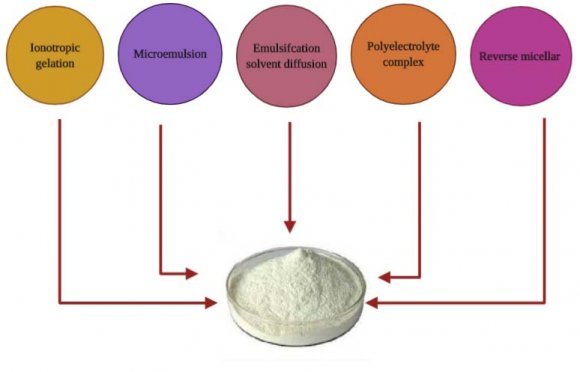
In this strategy, the nanoparticles are mixed priorly with the monomer arrangement or monomeric fluid. Initiators are used for polymerization -heat, radiation, or other methods. Ceramic nanocomposites, bionanocomposites, polymer nanocomposites, claypolymer nanocomposites, elastomeric nanocomposites are prepared by this method. 3,20,22,23,24 Because of low monomer thickness, the uniform blending of particles in the monomer using high shear blenders is much easier to achieve. Also, the low consistency and high diffusivity bring about a higher pace of monomer dissemination into the interlayer region. The solvent undergoes evaporation ultimately. Through the combination of response conditions and surface changes, it is conceivable to control nanocomposite structurally. The preparation of nanocomposites by in-situ polymerization is depicted in Fig. 1. 25
15. ii. Solution blending method
In this method a solvent or solvent mixture is used to dissolve or disperse the filler nanoparticles. The polymer or pre-polymer is taken in a suitable solvent. Based on the solvent system, solution intercalation may occur between the polymer and filler. The polymer has to be soluble in the solvent and the clay or phyllosilicate filler materials must swell and disperse. The phyllosilicate is typically dissolved/ swollen in the solvent. Polymeric solution is separately prepared. These two solutions are blended. Absorption of the polymer chains occurs on the nanoparticles. The nanoparticles agglomerate again when the solvent is expelled. Through this technique, few exfoliated nanocomposites are synthesized. The product cost is high, as this method requires an enormous amount of solvent. The choice of appropriate solvent relies on the types of polymers used to prepare nanocomposites, restricting the applicability of this method. Some polymers employed include polyethylene oxide, polyvinyl acrylate, and polyacrylic acid. 2 Bionanocomposites, clay-polymer nanocomposites, and elastomeric nanocomposites are prepared by this technique. 20,22,24 iii. Co-precipitation Metal oxide nanoparticles, mixed metal, or metal ceramics nanocomposite and also different types of metal nanocomposites such as metal-metal oxide, oxide-oxide, and oxide-matrix are prepared by utilizing the co-precipitation method. A homogenous solution of ions is obtained, when precursors such as inorganic salts are dissolved in water. Such salts begin to precipitate as hydroxides or oxalates once the critical concentration of the species is reached, followed by nucleation and growth phases. The solution's pH, temperature, and concentration of salt are responsible for the size and shape of particles. The calcination to change hydroxides into oxides with a definite crystalline structure occurs after precipitation, filtration, and washing. The precipitation medium employed is sodium hydroxide, ammonia, ammonium hydroxide, sodium carbonate, etc. To prevent agglomeration, surfactants are used because of which the particle size has been affected. Affordable, water-based reaction, flexibility, mild reaction conditions, size control, basic, and simple are the advantages of this method. 26 Ceramic nanocomposites may be prepared by this process.
16. iv. Melt intercalation
This approach represents an easy way to synthesize nanocomposites. Nanoparticles are blended with a molten polymer, rather than using a solvent. Solvents are not being used in this method. It provides a financially enticing route in creating compound nanocomposites. By this method, a wide variety of polymer/clay nanocomposites have been synthesized using nylon 6, polypropylene (PP), and polystyrene. However, care must be taken to fine-tune the surface chemistry of the coated salts. It plays a crucial role in the delamination / dispersion of the sample. It is important to disperse the clay particles in the molten polymer. For non-polar polymers, e.g. PP, a polar compatibilizer such as maleic anhydride-modified PP (Polypropylene-Maleic Anhydride) is commonly added to improve the compatibility of PP and clay. This is the dispersion of clay nanoparticles. Nanofiber Polymer / CNF (Cellulose Nanofiber) nanocomposites have also been formulated
17. Medical Research
Volume XX Issue VII Version I Nanocomposites:-A Recent Overview using this process. It is necessary to apply shear stress to disintegrate and disperse nanoparticles; therefore, it must be regulated at an acceptable level. The characteristic properties of nanocomposites formed by this method rely on two main factors, i.e., processing conditions and enthalpy interaction between polymer and nanoparticles. The only drawback of this is that bound biopolymers are degraded by either the mechanical cutting force or the temperature applied throughout the process that results in degradation due to the cleavage of the compound chains and, subsequently, a decrease in the relative molecular mass in the clay-supported nanocomposites softening process. For example, high shear sustained over long periods of time is required for the scraping of platelets. However, such high and prolonged shearing will contribute to the degradation of bound polymers. 2 The melt intercalation approach has enormous benefits in comparison to both polymer intercalation solution and in situ intercalation polymerization. The two reasons are: Firstly, it is environmentally friendly since there are no organic solvents implicated, and furthermore, it is compatible with industrial processes such as extrusion and injection molding. The process for this method is simple as it involves annealing (statically or under shear), a mixture of the polymer and layered silicate above the softening point of the polymer. Bionanocomposites, clay-polymer nanocomposites, elastomeric nanocomposites are prepared by this technique. 20,22,24 The preparation of nanocomposites by melt intercalation is depicted in Fig. 2. 27 Fig. 2: Preparation of Nanocomposites by melt intercalation method 27
18. v. Electro spraying method
In electro spraying method the constituents of the nanocomposite are in liquid form (solution/dispersion). Small and closely mono-disperse particles are formed when the solution or suspension of nanoparticles is sprayed. Potential difference between nozzle and collector plate lead to deposition of the droplets on the plate. The droplet size can be maintained typically by maintaining the flow rate of the liquids or by changing the voltage of the droplet charge applied to the nozzle. Coagulation is prevented by selfdispersing charged aerosol. This method finds application in areas concerning drug delivery, diagnostic and therapeutic biomedical imaging, implant coating, and tissue engineering. Ceramic nanocomposites are prepared by this process. 3 The preparation of nanocomposites by electro spraying is depicted in Fig. 3 A template, in general terms may be stated to be a form, mold, or pattern used as a basis or lead to making something. In this method of preparation of nanocomposites, a template is employed upon which the nanomaterial is built upon or developed. The templates can be naturally occurring -nanominerals, biological molecules, cells, and tissues; and synthetic materials surfactants, porous materials, micro and nano particles, etc. Those templates which have a rigid structure are termed as hard templates and those that do not have are termed as soft template. These systems are simple, vital, and applicable for large scale production. 27 A variety of non-silicon-based mesoporous materials, such as solid or hollow aluminum oxide, titanium oxide, aluminum phosphate microspheres, mesoporous carbon pellets may be used as templates. The choice of design is crucial for preparing nanomaterials. There are possibilities of contamination due to side products, as it largely requires water-soluble polymers. 29 Polymer nanocomposites, bionanocomposites, are prepared by this technique.
19. vii. Electro-spinning technique
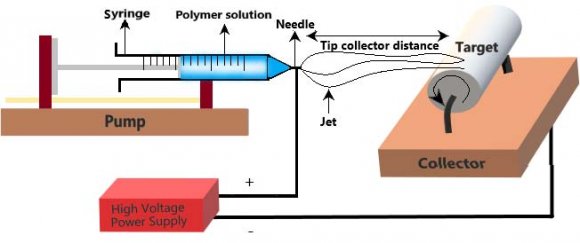
Electro-spinning is the latest and the most preferred method to prepare nanocomposites. During electro spinning, the blend of a polymeric solution is drawn through a syringe and high power voltage is being applied to the polymeric solution by an alligator clip attached to the syringe needle. The volt is accustomed to 15kV. The polymer is administered through the blunt needle end, utilizing the syringe pump to regulate the flow rate of the solution. The fibers are collected on an electrically grounded foil of aluminum mounted to the tip of the needle at 15 cm vertical. A few process parameters for optimization include polymer concentration, voltage applied, distance between syringe tip and collector foil, solution flow rate, etc. Polymer nanocomposites, metal-based nanocomposites are prepared by this method. The preparation of nanocomposites by electro spinning is depicted below in Fig. 4
20. Rheological Properties
The influence of solvent, organic filler, CNTs, inorganic fillers, pulp fibers, micellear system, nanoparticles, etc on the rheological property of nanocomposites has been evaluated. Hybrid nanocomposites can be made from natural or synthetic fibers and/or both are utilized. Hybrid nanocomposite rheological property has been found to depend on fiber content, fiber length, fiber orientation, fiber-to-matrix bonding, fiber configuration and filler. Some materials studied include Triglycidyl Ether Trimercapto Ethanol Phosphorus (TGETMEP) and 4,4diaminodiphenyl benzene (MDA). Some fillers employed were Tri Sodium Phosphate (PTS) and Titanium oxide (TiO 2 ) 33 .
21. Targeted drug delivery
Targeted drug delivery to cancer tissue has been studied employing nanocomposites. Doxorubicin in glioma, methotrexate in osteosarcoma are some examples. Doxorubicin has been formulated with grapheme oxide and ferrosoferric oxide (GO/Fe 3 O 4 ) conjugated along with lactoferrin for targeting. Methotrexate was delivered to human osteosarcoma cells via Magnesiumaluminum double hydroxide coated on Silicon dioxide nanodots 34 .
22. viii. Latex technique
This approach is used in the elaboration of elastomeric nanocomposites. Elastomeric nanocomposites were obtained by coagulating the latex of elastomers like Styrene-Butadiene Rubber (SBR), styrene-vinyl pyridine-butadiene with an aqueous clay suspension. The clay material employed may be bentonite dispersion in water (4%), aqueous sodium montmorillonite clay suspension (2%). Subsequently, an aqueous dispersion of the curing agent was applied, and pre-vulcanization of the latex-clay mixture was performed yielding the nanocomposite. A 2% sodium montmorillonite aqueous suspension and SBR latex were combined and coagulated in an electrolyte solution (1% calcium chloride or 2% sulphuric acid). Upon washing and drying, the SBR-nanocomposite was obtained. Vulcanization was done in a two roll-mill. 24 ix. Supercritical fluid method Supercritical fluid technology has been used in preparation of polymer/metal-polymer nanocomposites. 31 One newer study includes preparation of the glossy CaCO 3 -polymer nanocomposites in the presence of a polymer by introducing CO 2 as a supercritical fluid into and aqueous system of calcium ions. Supercritical CO 2 was used to facilitate the mineralization for the development of a CaCO 3 -polymer nanocomposite with a controlled threedimensional shape. In general, a combination of poly vinyl alcohol (PVA), Ca-acetate, and poly acrylic acid (PAA) was poured into a mold; the mold was placed into an autoclave and CO 2 was introduced to the polymer matrix leading to formation of CaCO 3 -polymer nanocomposite. Laser Raman spectroscopy and electron transmission microscopy revealed that the resulting nanocomposite consisted of widely scattered nanoparticles of CaCO 3 and had excellent mechanical properties. Its flexural strength was superior to the flexural disabilities of CaCO 3 provided by hot hydrothermal pressing method. Polymer nanocomposites are produced by this process. 32 IV.
23. Research and Applications
Nanocomposites have become versatile materials in many domains of life. Their utility is diverse. The current research thrust and applications of nanocomposites are given in Table 1.
24. Controlled drug delivery
Release rate control of drugs like metformin, propranolol, aceclofenac etc, has been achieved by biopolymer based nanocomposites. Chitosan has been studied. Nanocomposites have been prepared employing aminopropyl silane along with polyethylene glycol/ polypropylene glycol, magnesium silicate, and locust bean gum respectively for the mentioned drugs 34 .
25. Wastewater treatment
Nanocomposites consisting of nanomaterials like zero valent metal nanoparticles, metal oxide nanoparticles (TiO 2, zinc oxide), carbon nanotubes have been used the treatment of wastewater. Silver nanoparticles have antimicrobial activity and aid in water disinfection while the zero valent metal nanoparticles aid in removal of organic and inorganic pollutants 35 . The nanocomposites may aid purification of wastewater due to their interactions with pollutants either through chelation, absorption, ion exchange, etc.
26. Bone tissue engineering
These artificial bone graft substitutes are utilized to satisfy bone integration and regeneration of bone in-vivo. Hydroxyapatite nanowire/collagen elastic porous nanocomposite were studied 36,37, . The mechanical properties and cell attachment efficiency were assessed in detail. Polymers were broadly used in tissue engineering. However, polymer cannot attain mechanical behavior comparable to bone. Polymer nanocomposites proved to be a viable solution for repairing defects in bones. Another work includes graphene based nanocomposite scaffold incorporated into a fibrin hydrogen for bone repair. 38 6.
27. Gas barrier and food packaging
Nanocomposites exhibit versatile properties and find application in w Overall barrier performance can be increased, by the proportion of incorporation of the filler, and the amount of clay within the chemical compound 39 . Due to obtaining a characteristic barrier, extended interest in nanoclay composites in food packaging, each versatile, and rigid. Packaging of processed meats, cheese, cereals. Exploration into new nanocomposites for food packaging include studies on nanocomposite made with chitin and bamboo nanofibers where no solvent has been used and so is a green synthesis 40 , microbial polyhydroxybutyrate (PHB) based graphene nanocomposites for potential food packaging applications 41 , zein films with zinc oxide (ZnO) and ZnO-magnesium quantum dots based nanocomposite is found to have UV barrier properties. 42 Extensive work has been reported on chitosan based nanocomposites for food packaging applications.
28. 7
Construction of automobile Fuel tanks.
The solvent transmission has been reduced in polyamides by using nanoclays. Due to incorporation of nanoclays vital decrease in fuel transmission through polyamide-6/66 polymers. Due to which, extended intrigue is currently being appeared in these materials as each fuel tank and components for cars 43 .
29. Textile industry
The polymer/CNT nanocomposites find applications in textiles for flame retardation, electromagnetic shielding, for dye removal and as sensors. Non-conducting polymers such as epoxy, nylons, polyesters, etc. and intrinsically conductive polymers like polyaniline, thiophene, and polypyrrole have been used in textiles incorporating carbon nanotube 44 9 Anticorrosives
Corrosion is the deterioration of a material due to exposure to the environment and is a global problem. the use of coatings and corrosion inhibitors are the common strategies to overcome corrosion. Polymeric coatings with incorporation of nanofillers show better inhibition of corrosion. Montmorillonite, CNTs, Single-walled CNT, Double-walled CNT, Multi-walled CNTs, Functionalized CNT are some nanofillers 45 . Organically Modified Fluorohectorite in Polyetherimide (PEI) nanocomposite's matrix been studied for anticorrosion coat material . 46 10 Agriculture
To reduce the burden of fertilizers and pesticides, nanocomposites are used. Misfortune in soil diversity and resistant development against pests and pathogens are the consequences of using chemical fertilizers in excess. Water treatment, pest control and detection, agriculture productivity. 47 11
30. Nervous tissue engineering
For addressing the issue of regeneration of peripheral nerve injury (PNIs), nanocomposites supported with silk fibroin (SF) reinforced gold nanorods (GNR) were fabricated and studied GNR nanocomposites had a better cellular attachment, proliferation, and growth with no toxicity, compared with bulk SF scaffold. 48 12 Cosmetics
31. Electrochemical nanosensor
Against conventional spectroscopic or chromatographic methods for estimation of biomolecules/ drugs, novel electrochemical sensors based on nanocomposites were developed. Nanocomposite surface is coated with Molecular Imprinting Polymer (MIP) which has cavities for the analyte molecule. Graphene / graphene oxide and silver nanoparticles were studied. 51 Photoelectrochemistry platform based on N-doped graphene/TiO 2 nanocomposite has been developed as sensor for antioxidants capacity assay. 52 Cosmetic industry has seen studies involving the use of nanocomposites. Ag-TiO 2 nanoparticles show enhanced antibacterial property than TiO 2 alone. A novel Nanocomposite was made employing ZnO, TiO 2 and Ag TiO 2 /Zn 2 TiO 4 /Ag which could be beneficial in development of sunscreen cream with high protection 49 . Antiaging functionality has been found due to UV protection and water retention capacity of Quaternized carboxymethyl chitosan/organic montmorillonite nanocomposite and was suggested as a new cosmetic ingredient. 50
32. Medical Research
Volume XX Issue VII Version I
33. Conclusion
The versatility of nanocomposites in terms of the exhaustive combinations of materials and their far outreaching applications in all the domains of life makes them a segment of science drawing much attention for future expansion. The present market exists in the areas of Packaging, Automotive, Electronics and Semiconductors, Coating, Aerospace & Defence, Energy, Others (Marine, Biomedical, Industrial) 1 . In addition to the market for the constituents of nanocomposites like CNT, Graphene, clays, etc., 14 Dental applications 15 Solar cell Either to harvest solar energy or to assist charge transfer process, both organic and inorganic nanocomposites have been successfully integrated into the solar cells. A novel superparamagnetic core-shell nanocomposite of poly(m-aminobenzenesulfonic acid) (PABS) and Fe 3 O 4 was synthesized by in-situ polymerization. The power conversion efficiency of the novel nanocomposite was found to be 660% higher than TiO 2 and Aluminum based material using the same polymer. 56 Silver/Graphene oxide/TiO 2 ternary nanocomposite based photoanode approach has been studied to develop highly-efficient plasmonic dye-sensitized solar cells which showed 6% enhancement in power conversion 57 . 64 , FiltekZ350 XT by 3M (tooth fillers) 65 , chitosan/organic rectorite nanocomposite films (Bactericidal activity), graphene oxide/ Carboxymethylcellulose (targeted drug delivery of anticancer drug doxorubicin) 66 , MD 1 Flex, NANOCLEAN MD 1 and PLACTIVE (Antimicrobial nanocomposites), 67 NovaPro TM (Tooth fillers) 68 . Tremendous progress is evident in science of nanocomposites. with improvement in material from simple binary system to ternary and hybrid systems; in fabrication technologies from spray coating to ink jet printing. Though Dental filling technology finds potential application for nanocomposites. Poly methyl methacrylate nanocomposites reinforced by nanoparticles of Titanium dioxide and Calcium aluminate have been studied for mechanical and tribological properties. 53 other dental applications include fabrication of core and post systems and dental brackets, dental restorations like inlays, onlays, veneers, and crowns. the liquid crystalline epoxy nanocomposite resin made of bisphenol epoxy resin have been used for orthodontic brackets with improved microhardness. 54 another filling materials studied includes MCM-48 mesoporous silica nanocomposites with hydroxyapatite. 55 Many nanocomposites have been reported to have antibacterial action. The antibacterial action has been put to various applications as in water purification, in fisheries and aquaculture, etc. Bacteria that multidrug resistant are posing serious threat to therapy of various diseases. In the health care, graphene nanoplatelets /Cr 2 O 3 nanocomposites (GNPs/Cr 2 O 3 ) have been reported as a potential nanomedicine. This nanocomposite had excellent growth inhibition against Pseudomonas aeruginosa and Staphylococcus aureus. 61 Silver nanoclusters/rose bengal nanocomposite (AgNCs/RB) have been developed and evaluated as an antibacterial agent with functional response to light. Streptococcus mutans, Porphyromonas gingivalis and Aggregatibacter actinomycetemcomitans have been studied. The bacterial turbidity was found to be significantly reduced by the use of the novel nanocomposite. The activity has been attribute to activity silver ions as well as generation of 1 O 2 species due to photoexcitation. 62 Bacterial cellulose (BC) based The nanocomposites have been developed. The nanocomposite film was synthesized by incorporating Graphene Oxide-CuO nanohybrids into BC matrix through homogenized blending. displayed better antibacterial activity against gram-positive than gram-negative bacteria. BC/GO-CuO nanocomposites showed higher antibacterial activity than BC/CuO. 63
34. Medical

| Aerospace | |
| 16 | engineering |
| 17 A new class 18 Luminescent materials Antibacterial- | |
| Novel | |
| nanoantibiotics | |
| Antimicrobial | |
| photodynamic | |
| therapy | |
| Bacterial | |
| cellulose based | |
| NC | |
| commercialization has progressed in products like InMat | |
| (coating) | |