1. Introduction
sthma is a chronic inflammatory disorder of the airways characterized by recurrent episodes of wheezing, breathlessness, chest tightness and cough that is often reversible either spontaneously or with treatment (Global Initiative for Asthma 2004).
In India, an estimated that 57,000 deaths were attributed to Asthma in 2004 (WHO 2004) and it was seen as one of the leading cause of morbidity and mortality in rural India (Smith 2000). Though effective screening, evaluation, and management strategies for Asthma are well established in high-income countries, these strategies have not been fully implemented in India as evidence had previously suggested that Asthma is not to be treated independently but fitted into the general spectrum of respiratory diseases (Krishnakumar 2003). Furthermore, even though medicines that treat Asthma effectively are available at affordable costs, they rarely reach more than one per cent of those who would benefit from it (Krishnakumar 2003). According to World Health Organisation (WHO) estimates 300 million people suffer from Asthma, 255, 000 people died of Asthma in 2005 (WHO 2004) and over 80% of Asthma deaths are reported from low and lower-middle income countries (Braman 2006). Asthma creates a substantial burden on individuals and families as it is more often under-diagnosed and under-treated. (Rabe et al 2000; Adachi et al 2002) Approximately 300 million people worldwide currently have Asthma, with estimates suggesting that Asthma prevalence increases globally by 50% every decade (Masoli et al 2004). With the projected increase in the proportion of the world's urban population from 45% to 59% in 2025, there is likely to be a marked increase in the number of Asthmatics worldwide over the next two decades. It is estimated that there may be an additional 100 million persons with Asthma by 2025 (Masoli et al 2004).
According to the recently conducted cross sectional nationally representative National Family Health Survey (NFHS)-3, the overall prevalence of asthma among adult men and women in India is similar with 1,696 and 1,627 per 100,000 respectively (IIPS and Macro International 2007).
The present study was undertaken to record the prevalence of asthma among patients attending multi specialty centre OPD, Ballimaran Delhi.
2. II.
3. Methodology
This cross sectional study was carried out in multi specialty center Ballimaran OPD, the total no of subjects enrolled in this study were 1000, and Inclusion criteria are all age groups, outpatients, asthma patients. Exclusion criteria are Psychiatric patient, Asthma and allergic rhinitis co morbidity with other disease.
The patients were selected by random computerized sampling method, motivated to participate in the study. Assessment was done air flow obstruction by flow meter. The instrument used were Mini peak expiratory flow meter and stethoscope.
4. III.
5. Questionnaire
The patients were requested to answer a questionnaire of following question: patients were asked, "Do you suffer with a blocked nose/stuffy nose/catarrh/sneezing/runny nose/itchy eyes/ears/roof of mouth?" "Do you suffer with asthma (wheezing/tight chest/cough/shortness of breath)?" "In the last month, have you suffered with any of these symptoms even when taking your regular medicine?" Waking in the night because of asthma, Shortness of breath, Wheezing,
6. Core questionnaire wheezing
'Have you ever had wheezing or whistling in the chest at any time in the past?' 'Have you had wheezing or whistling in the chest in the last 12 months?' 'How many attacks of wheezing have you had in the last 12 months?' 'In the last 12 months, how often, on average, has your sleep been disturbed due to wheezing?' 'In the last 12 months, has wheezing ever been severe enough to limit your speech to only one or two words at a time between breaths? 'Have you ever had asthma?' 'In the last 12 months, has your chest sounded wheezy during or after exercise?' 'In the last 12 months, have you had a dry cough at night, apart from a cough associated with a cold or a chest infection?' 'Check which time of year your child has the most difficulty breathing (cough, wheeze, chest tightness), Family history of Asthma?' 'How often are breathing problems, coughing or wheezing Occurring during the DAY?' 'How often are breathing problems, coughing or wheezing Occurring during the night?' 'Does physical activity cause breathing problems wheezing or coughing?' V.
7. Occupation
Occupations of the subjects were recorded for assessment to socio economic status. It was recorded under following categories.
? Labour ? Student ? Unemployed ? Shop keeper ? Businessmen ? Mechanic ? Farmer ? Driver ? Tailor ? Clerk ? Teacher ? House wife VI.8. Socioeconomic status
The SES was assesses by using the Kuppuswami's SES Scale for Urban population, 1976. Due to changes in the economy to year, the classification or scale was modified accordingly.
9. VII.
Diagnosis of patient's IX.
10. Statistical analysis
The data were analyzed on SSPS version 10.0. Chi-square test was applied to test the significance of association of prevalence with risk factors at P < = 0.05.
11. X.
12. Results and discussion
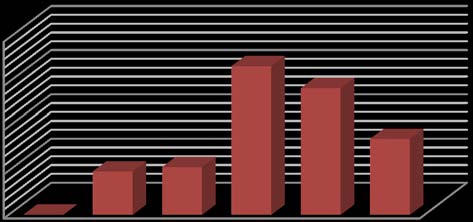
In or study as shown in Figure no. 1, out of total subjects, 9.8% were in the age group 0-15 yrs, 10.8% were in the age group of 16-30 yrs, 33.6% were in age group of 31-45 yrs, 28.6% were in age group 46-60 and 17.0% were found in the age groups of >60 yrs respectively. The difference may be due to easy access and high health consciousness in male as compared to female. The prevalence of asthma among male was 13.42%, among female was 12.41%. Total prevalence was 13.0%. Our study shows that prevalence of asthma was more among males compared to females. High prevalence among males may be due to more exposure of male population to various industries, dust and overcrowded places. In our study total prevalence of asthma was 13.0% (Table No In our study the prevalence was higher as compared to other studies. The cause of high prevalence may be due to the participation of all age group subjects in the study. There was limited information on prevalence of asthma among all ages group. Increasing trends of prevalence rate probably was due to allergic and environmental conditions which can provoke asthma in Delhi. It is also supported by study conducted in four mega cities Bangalore, Kanpur, Delhi and chandigarh in which prevalence of asthma 3.47%, 2.07%, 1.68%, and 2.28% respectively in age groups of 15-75 years ( AN Aggarwal et al 2006) As shown in Figure no.4, the prevalence of asthma among subjects in age group 0-15 years was 28.58%, among 16-30 years was 20.38%, among 31-45 years was 11.60% among 46-60 years was 9.45%, among >60 years was 8.14%. Difference in prevalence in asthma among different age group was statistically significant and revealed the dominance of 0-15 year's age group. In our study, prevalence of asthma was high in age group 0-15 years and lowest in the age group >60 years. A study conducted by Murthy KJR showed that the prevalence was higher in small age group, our study also show concordant findings (Murthy KJR 2006). Increasing prevalence of asthma could be seen in small age group due to higher vulnerability of children to allergic conditions. Our study showed high prevalence in the subjects having family history association. A study conducted by Chowgule RV et al that there is a strong correlation between diagnosis of asthma and the history of family disease of asthma (Chowgule RV et al 1998).
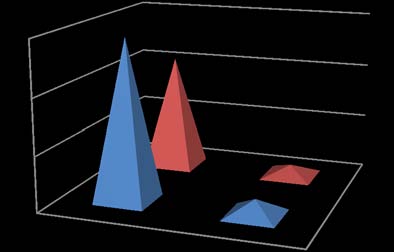
As shown in Table No. 2, In our study 190 (19%) were illiterates, 287 (28.7%) were educated upto primary school, 186(18.6%) upto middle school, 180(18%) upto High school, 67(6.7%) upto Intermediate and 90(9%) upto UG and PG. The prevalence of asthma among higher socio economic status was 13.07%, among middle socio economic status 14.61%, among lower socio economic status 44.62%, and among very socio economic status 27.70%. According to SES the prevalence of asthma was highest among the class III Lower SES 44.62%, next higher among the class IV Very Lower SES 27.70%. This result indicates that poverty is a risk factor for asthma occurrence.
13. XI.
14. Conclusion
Asthma is a common disease worldwide with significant ethnic and regional variations. An increasing morbidity and mortality, as well as health care burden from asthma has been recognized. There has been a change in the epidemiology and clinical spectrum of asthma with an apparent increase in the overall prevalence along with a rise in the incidence of 'difficult to treat' cases. The present study concludes that prevalence of asthma is more among the subjects age group of 0-15 years, more among illiterates and education upto high school may be due to lack of education and awareness regarding asthma. So as for prevention asthma it is necessary to provide for health professional as can serve asthma educators and appropriate strategies should be initiated like continuing medical education.

| representative National Family Health Survey (NFHS)-3, | ||||||||||
| the overall prevalence of asthma among adult men and | ||||||||||
| Jindal SK et al among population of 18 yrs and above | women in India is similar with 1,696 and 1,627 per | |||||||||
| during 1995-97 find out the prevalence was 3.94% in | 100,000 respectively (IIPS and Macro International | |||||||||
| urban population (Jindal SK 2000). According to the | 2007). | |||||||||
| recently | conducted | cross | sectional | nationally | ||||||
| Males (n=581) | Femals (n=419) | Total (n=500) | ||||||||
| Status | No. of subjects | Percentage | No. of subjects | Percentage | No. of subjects | Percentage | ||||
| Normal | 503 | 86.58 | 367 | 87.59 | 870 | 87.00 | ||||
| Asthma | 78 | 13.42 | 52 | 12.41 | 130 | 13.00 | ||||
| Total | 581 | 100 | 419 | 100 | 1000 | 100 | ||||
| 60 | 28.58 | ||||||||
| 50 | 11.6 | ||||||||
| 40 | 20.38 | 39 | 9.45 | ||||||
| 30 10 20 | 28 | 22 | 27 | 14 8.14 | Percentage cases | ||||
| 0 | |||||||||
| 0-15 16-30 31-45 46-60 >60 | |||||||||
| according to Education (n=1000) | |||||||||
| Education | No. of Subjects | Percentage (%) | Prevalence Cases | Percentage | |||||
| Illiterate | 190 | 19.0 | 29 | 22.31 | |||||
| Primary | 287 | 28.7 | 27 | 20.76 | |||||
| Junior high school | 186 | 18.6 | 26 | 20.0 | |||||
| High school | 180 | 18.0 | 31 | 23.85 | |||||
| Intermediate | 67 | 6.7 | 12 | 9.24 | |||||
| UG + PG | 90 | 9.0 | 5 | 3.84 | |||||
| Total | 1000 | 100% | 130 | 100% | |||||
| In our study revealed out prevalence of asthma | |||||||||
| among illiterate was 22.31%, primary school educated | |||||||||
| was 20.76%, Junior high school educated was 20.0%. | |||||||||
| high school educated was 23.85%, intermediate | |||||||||
| educated was 9.24%, and UG & PG was 3.84%. The | |||||||||
| according to Education (n=1000) | ||||
| SES | No. of Subjects | Percentage (%) | Prevalence Cases | Percentage |
| Higher SES | 132 | 13.2 | 17 | 13.07 |
| Middle SES | 287 | 28.7 | 19 | 14.61 |
| Lower SES | 485 | 48.5 | 58 | 44.62 |
| Very | 36 | 27.70 | ||
| Lower | 96 | 9.6 | ||
| SES | ||||