1. Introduction a) Normal Pregnancy And Liver
ormal pregnancy by itself is a mild cholestatic condition. Though liver is not oable, palmar erythema and vascular nevi may be seen in normal pregnancy. Serum biochemical tests in the last trimester show increase in = <a ne phosphatase, cholesterol and serum bile acid. This elevation hardly e = ceeds two or four times the non gravid value and is mainly of placental origin in addition serum albumin concentration may be decreased to values '0-60% below those in the pregravid state primararily because of the Tcreased blood volume.
Altered liver function is also confirmed by reduced bromsulphthalein uptake. _ ver blood flow comprises 35% of the cardiac output in nonpregnant patient /hereas during pregnancy it is reduced to 28% as the rest of the blood is shunted through the placenta. Liver is one of the many organs affected during pregnancy due to metabolic and hormonal changes associated during pregnancy. Present available knowledge is inadequate to asses the disease, hence this study was undertaken to evaluate the status of liver disease in pregnancy in patients admitted in this institution. ii. Cli Nical Features Of Acute Viral Hepatitis Jaundice is the main symptom of acute hepatitis. It is usually preceded by orodromal symptoms by two weeks. These are the most common associated s.mptoms of acute infectious disease that include fever, chills, headache, -= aise and arthralgia. Gastrointestinal symptoms may be prominent, mainly anorexia, nausea, vomiting, diarrhoea. Upper abdominal pain which is there is rue to stretching of the peritoneum over the enlarged liver. Dark urine and a .e low discolouration of sclera herald the onset of jaundice.
2. Clinical signs-
There is icterus Liver is tender though not readily palpable Cervical lymph nodes may be enlarged Investigations Plasma aminotransferase (SGOT & SGPT): exceed 400IU/L (most striking -sature).
Hyperbilirunimia (reflects the severity of the jaundice), Plasma alkaline phosphatase (reflects severity of cholestasis) Prolonged prothrombin time (indicates severe liver damage and changes -its value have prognostic value).
UrineExamination : shows presence of bile salts, bile pigments and proteins in urine.
WBC count is normal or low. High value reflects associated sepsis.
3. II.
4. Materials and Methods
This study was a combined prospective and retrospective one. The study period included duration of six years It includes 30 cases admitted to this hospital as cases of jaundice in pregnancy.
All the patients admitted as diagnosed cases or diagnosed in this institution on investigations were included in this study. A systematic approach to the diagnosis depending upon the presenting symptomatology was made at the onset of the disease. All the patients were assessed thoroughly by both clinical examination and investigations in the from of CBC, LFT, KFT, COAGULATION PROFILE, USG OBSTETRICS AND USG ABDOMEN Serological tests done for identification of type of virus (viral markers) HAV antibody (IgM, IgG) HBV (HBsAg, HBeAg, anti-HBe) HCV (anti-HCV antibody) HEV antibody (IgM. IgG).
As the causes of jaundice are varied and the diagnosis entails different modes of investigations, depending upon clinical condition suspected, the protocol was evolved to rationalize the approach. As we all know there is no specific treatment for acute viral hepatitis.
Bed rest and diet comprised the main factors in the management of these patients. Broad-spectrum antibiotics, mainly third .generation cephalosporines (which were not hepatotoxic) and antimicrobials mainly metronidazole were given to prevent sepsis.
Fetal monitoring was done by biophysical methods. Delivery It was expedited whenever indicated either vaginal or by ceaserian section as and when indicated. All the patients were given fresh frozen plasma (minimum four) In labour, to avoid excessive bleeding. Blood sugar monitoring was done frequently in labour to prevent stree induced hypoglycemia.
5. III.
6. Observations and Results
The number of patients included in this study was 30. The observations are mentioned in tabular form as follows, Total no. of deliveries=7180 Cases of jaundice=30
In this study the incidence was found to be one in 239, Viral hepatitis -1 in 398 Cholestatic jaundice -1 in 797 Acute fatty liver of pregnancy -1 in 7180 Drug induced jaundice -1 in 7180 HEELP syndrome -1 in 7180
The overall incidence of jaundice in our study was very high as compared to 1 in 700, it's mainly because this institution is a tertiary referral center. Incidence of each causative factor is as follows Volume XIII Issue II Version I Year 013 2
( )
7. E
In this study the disease was found to be more common in younger age group. As observed in other studies viral hepatitis was found to be the commonest cause of jaundice in pregnancy.
In this it was found that vomiting, nausea, high coloured urine, were the most common presenting symptoms. Though pruritus was less commonly found, but if pruritus is the presenting symptom, cholestasis in pregnancy should be ruled out.
Hepatitis E viral infection was found to be the most common agent causing jaundice in pregnancy. Our data matches with the data published by ICMR (Pune, India 1992) the maternal mortality late found ICMR study was upto 50 % while in our study it was found to be 13 % in cases of HEV affected patients. As expected, the incidence of coagulation failure was found to be high in this study followed by abnormal renal function, DIC, septecemia, and hepatic coma. In this study the incidence of preterm labour was found to be 48%. The perinatal mortality rate of this study was 16.6%.
Preterm labour was one of the main obstetric complications found in these patients. Five out of 30 cases of jaundice in pregnancy died, of acute hepatic failure. Other associated complications contributing to maternal mortality were.
8. Hepatorenal syndrome 2. DIC 3. Septicemia 4. Hepatic coma
The etiological factors associated with maternal deaths were as shown below Cause of jaundice Out of these 3 cases one was each of homeostatic jaundice, acute fatty liver and HELLP syndrome.
9. IV.
10. Discussion
As shown in table 1, 2 and 3 the incidence of jaundice was found to be one in 239 cases.As found in other studies in our study also it affected younger age group and viral hepatitis was found to be the commonest cause of jaundice in pregnancy.
As shown in table 4,5 a nd 6 the incidence of viral hepatitis was found to be one in 398 pregnancies, which is high, compared to reported incidence of 1 in 700 reported in technical bulletin of ACOG (1). The incidence in our study may be high as in India the overall incidence is high due poor sanitation and low socio economic conditions, also this is a tertiary hospital, which gets lots of referred cases from primary and secondary centers.
As reported by Schorr L B et al(2) the incidence of HAV infection is less than 1 in 1000 cases, whereas in our study it was found to 1 in 3590 pregnancies. Not a single case of vertical transmission was found, but rare cases of perinatal transmission have been reported.
AS Incidence of acute HBV infection reported by Schorr L B et al ( 2) is 2 in 1000 pregnancies. A shown in table 6 in our study only one patient was affected by acute HBV infection. The patient was HbeAg positive also HEV-IgM antibody positive, the baby is HbeAg positive. As reported by Simms H F and Snydmann et al (3,4) the vertical transmission rate with HbeAg+ve and HBeAb -ve is as high as 90%,whereas if patient is HbeAb+ve the vertical transmission reduces to 10%.The risk of vertical transmission to the fetus is directly proportional to HBV-DNA viral load.
Our study did not have a single case of HCV infection. Though the reported incidence being rare it is rising in developed countries like USA. Chronic HCV infection affects 1.4% of US population.
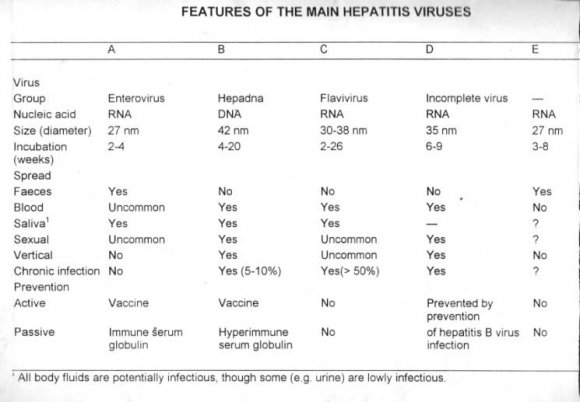
HEV infection is the most prevalent and dangerous type of viral hepatitis in Asian and African continents. The incidence reported by a study done by ICMR is as high as 80-90% in cases of viral hepatitis in pregnancies. As shown in our study also it is 83%.
Study done by Ohto H et al (4) showed a marked variation in vertical transmission rate of HCV from 0-36 %.
Reyes H and Simms H F et al (3.5) studied the course of viral hepatitis in pregnancy and concluded that its course is unaltered in pregnancy, except in cases of HEV infected cases, in which cases hepatitis has more fulminant course.
Both maternal and perinatal mortality reported by Reyes H and Simms H F et al (3,5) js upto 20 and 50% respectively. The maternal mortality rate in cases affected by HEV was 13%. The incidence of prematurity found in this study is 48% which matches with 20-44%, that reported by Fisk et al (6).
As shown intable 8 in our study the prenatal mortality rate is found to be 16.6%.
Intrahepatic cholestasis is found to be the second common cause of jaundice in pregnancy. Pruritus is the hallmark feature of this diseas In the study done by Gitlin N and Reily et al (7,8), 80%of the patients presented with pruritus . In our study all the cases presented with pruritus as their chief complaint. The maternal mortality rate found in our study is 11%, which is high as compared to 2 % as found by Fisk et al (6).
As hown in tbale 9, 10, a single case of each acute fatty liver and HEELP syndrome were found in this study. Both the cases were admitted in advanced stage of the disease with established complications. Both the cases died of severe hepatic dysfunction and associated complications. The maternal mortality reported by Kaplan et al (9) in case of acute fatty liver is upto 20 %,while that mentioned for HEELP syndrome by Sibai et al( 10) is 3 %.
Only one case of drug induced jaundice was found, the patient was 8 weeks pregnant. The jaundice was due high dose of rifampicin that she was taking for pulmonary tuberculosis. The patient was admitted with severe jaundice and hepatic coma. With withdrawl of the drug and intensive care management she improved completely but opted for termination of pregnancy.
Though both the cases of acute fatty liver and HELLP syndrome died, the reported incidence is not that high, for acute fatty liver, its upto 20-50 % and that for HELLP syndrome its 10-20%.
V.
11. Summary and Conclusion
The incidence of jaundice in this study was one in 239 pregnancies.which is high as this is a tertiary center.The disease is more commonly seen in younger age group.Parity has no exact relation with the disease.The commonest chief complaints associated with the disease found in this study were nausea, vomiting, high coloured urine, malaise and pruritus.Viral hepatitis was found to the commonest cause, HEV infection being the commonest, and associated with high maternal and perinatal mortality.Second common cause was found to be cholestatic jaundice of pregnancy, followed by acute fatty liver of pregnancy and HELLP syndrome and drug induced jaundice.The disease is associated with high incidence of preterm labour.Main causes of maternal mortality were found to' be, coagulation failure, hepatic coma, renal failure, septicemia.

| Age group | No. of cases | % |
| <25 years | 17 | 59% |
| 25-30 years | 09 | 30% |
| > 3 0 years | 04 | 10.3% |
| TYPE | N o. of cases | % |
| HEV | ||
| 15 | 83 | |
| HAV | ||
| 02 | 11 | |
| HBV | ||
| 01 | 05 | |
| HEV+HAV | ||
| 01 | 05 | |
| HCV | ||
| 00 | 00 | |
| HBeV +HEV | ||
| 01 | 05 | |
| Out of 30 patients, 21 delivered, that is 70% patients delivered during acute stage of the disease while in rest of them | ||
| pregnancy continued. | ||
| Delivered vaginally preterm | 18 | |
| Ceaserian section for obstetric indications | 3 | |
| Drug induced jaundice opted for (mtp) | 1 | |
| Patients delivered vaginally at term. | 8 | |
| Out of 29 deliveries, one was twin delivery, | |||
| No. | % | ||
| 1) No. of term deliveries | 15 | 51 | |
| 2) No. of preterm deliveries | 14 | 48 | |
| 3) No. of stillbirths | 5 | 16.6 | |
| 3 were preterm, 2 were term | |||
| Total no. of cases No. of deaths % | |||
| Intercurrent in pregnancy | 18 | 02 | 13 |
| (Both cases were HEV infected) | |||
| Peculiar to pregnanc | 11 | 03 | 27 |