1.
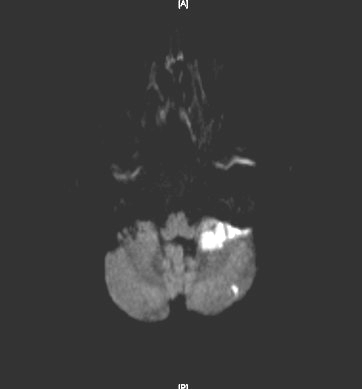
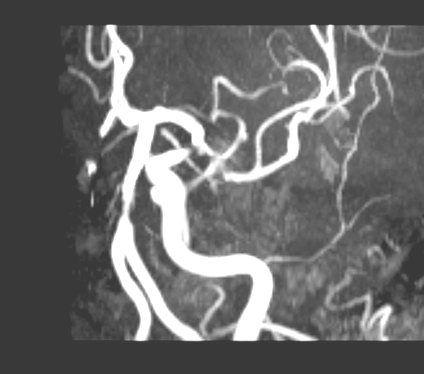
Abstract-We reported a case of anterior inferior cerbellar artery infarction initially manifesting with positional vertigo ensuing from abrupt onset of hearing loss. A 56-year-old Taiwanese man suffering from controlled hypertension visited a local hospital because of a "rocking sensation." He was referred to the ear, nose, and throat (ENT) department for evaluation and was diagnosed with peripheral vertigo associated with positional change. Symptomatic treatment was administered, but produced a limited effect. He was then transferred to our hospital and was admitted to ENT services. The symptom was aggravated when the patient turned his head to either side or bent his neck forward. Two days after admission, he suffered from abrupt onset of hearing loss in the left ear. A neurologist was consulted. Neurological and physical examinations revealed unremarkable findings, except for sensorineural type hearing impairment in the left ear. Cerebral magnetic resonance imaging (MRI) disclosed left-side anterior inferior cerbellar artery territory infarction. Magnetic resonance angiography (MRA) indicated stenosis in the midportion of the basilar artery and poor visualization of the left anterior inferior cerebellar artery. Auditory brain stem evoked potential testing indicated severe peripheral-type auditory pathway disorder in the left ear. Our patient was treated with 100 mg of lose dose Aspirin once daily for one month during hospitalization. Hearing loss was partially improved, whereas positional vertigo remained refractory. The patient was still undergoing regular follow-ups at neurological clinics up to date. This case indicated the urgency of neurological consultation when first-line clinicians encounter prolonged positional vertigo accompanied by sudden hearing loss. A high index of suspected ischemic anterior inferior cerebellar artery infarction should be considered and be placed into differential diagnosis. We recommend that neuroimaging studies be ordered in any case exhibiting similar symptoms to achieve timely diagnoses and administer correct medication.
2. Introduction
ositional vertigo is a commonly observed symptom encountered by most first-line medical practitioners. Vertigo is generally described as dizziness. Patients often report unsteadiness, heavy headedness, and general discomfort. 1,5 Misdiagnosis is Author ? ?: Attending physician(s), Stroke Center, Department of Neurology, Chunghua Christian Hospital. e-mail: [email protected] typically caused by blurred and nonspecific descriptions. Once vertigo is suspected, differentiating between peripheral and central type vertigo is critical because central type vertigo often requires urgent management. Positional vertigo, as the name suggests, is a pure symptom associated with posture change. In the ears, nose, and throat (ENT) field, this terminology is often linked with benign positional paroxysmal vertigo (BPPV). 11,12 However, the diagnosis should be made when other symptoms occur simultaneously. Recently, sudden onset of hearing loss has been reported in case reports regarding cerebellar infarction, particularly anterior inferior cerbellar artery (AICA) infarction. 1,6,9 AICA exhibits several branching arteries; among them, the internal auditory artery (IAA) 10 is the most prominent artery that supplies blood circulation in the inner ear. Any injury to the IAA causes vestibular symptoms. In reported cases, AICA infarction has often been associated with cerebellar signs and symptoms. Observing any neuroimaging proved cerbellar lesion in the AICA territory without demonstrating any cerebellar signs and symptoms was rare. In this paper, we present a case of positional vertigo ensuing from sudden onset of hearing dysfunction. The underlying pathophysiology and mechanisms leading to the ischemic event are discussed II.
3. Case Report
A 56-year-old Taiwanese man presented with an acute onset of positional "rocking sensation" several days before he sought medical attention. He was a former businessman who had retired 5 years previously. He was a nonsmoker but was diagnosed with hypertension by his family physician several years previously and had since undergone regular medication control. He initially thought he merely had a common cold and took over-the-counter medicine for a few days. However, the effect of the medicine was limited. He then visited a local hospital and was transferred to the ENT services because of a suspected inner-ear problem. An ENT doctor examined him and tentatively diagnosed him with peripheral vertigo. Based on the patient's statement, his symptoms worsened when he turned his head sideways and bent his head forward. His problem was not alleviated. He was transferred to our hospital for IV.
4. Conclusion
The protein S deficiency constitutes an ischemic stroke risk factor in black young people, and must be researched forwards all cerebral infarct to reduce the indeterminate stroke aetiology. A wide prospective study is necessary to measure the real prevalence and frequency of coagulation disturbance factors in our countries, in the setting of stroke prevention. Legend: M: male; F: female; SAA: salicylic acetyl acid.
three patients had not presented any of this main risk factor. It was necessary to make the research of coagulation inhibiting factor as protein C and S. We only make the research of protein S because patients had no much money and this test was not available done in our country. The patients had not forwards used anticoagulant and oestroprogestatif treatment or other treatment that could lead to diminish the protein S level. The deficit in protein S was not acquired in our patients. We did not make the protein S and CT scan control because the needy patients had to pay themselves. We did not also make the patient and their family biological and genetic survey but we retain a constitutional deficit in protein S as the ischemic stroke risk factor in these three patients. The protein S deficiency can be asymptomatic and explained the absence of familial thromboembolic disease that could be related. The deficiency in protein S as the cerebral infarct aetiology is rarely reported in young African people. [4] The estimation of the frequency of the protein S deficient in general population, and in black African in particular is difficult because of the lack of epidemiologic data and the studies were extremely rare. The frequency of protein S deficiency range around 11% to 34% in black African and Caribbean population. [5,7] This large diversity of the prevalence and the frequency must due to population heterogeneity and rare studies. The age of first onset reported range around 15 to 45 years old in patients with ischemic stroke, and the abnormities seemed to be autosomal dominant transmission. [4,6,8] This high prevalence of protein S deficiency must exist in African countries but still unknown.
crossed sensory loss, ataxia, and Horner's syndrome. 3 However, in our case, the brain stem and cerebellar signs and symptoms were absent. Sudden onset of hearing loss is a critical sign for AICA infarction 2,4,9 and can mimic other vestibular dysfunctions, such as Menier's disease, 4 vestibular neuronitis, labyrinthitis, and facial palsy. 2 Detailed neurophysiological testing and cerebral neuroimaging studies should be arranged for all patients presenting with deafness.
In the neurophysiologic testing, AEP also complemented the correct clinical diagnosis. In our patient, AEP revealed an absence of the first to fourth waveforms, except for the fifth waveform under normal and enhanced stimuli. The absence of the first waveform was due to the obstruction of the input stimuli generated from by the cochlear apparatus, whereas the presence of the fifth waveform delineated the intact brain stem function. The aforementioned findings echoed that of the cerebral MRI findings and supported the hypothesis that it was the ischemic cochlea that caused the clinical vestibular symptoms.
In summary, our case provides clinical evidence that if a patient presenting with a vascular risk factor that initially manifests with as postural vertigo ensuing from abrupt onset of hearing impairment, AICA territory infarction should be highly suspected, even though the brain stem and cerebellar signs are not apparent. 4 We recommend that cerebral neuroimaging be ordered in all similar situations to prevent misdiagnosis and promptly administer medication.
5. IV.
Legend

| N° Age/Sex | Clinical features | CT-scan/ MRI | Protein | Treatment | Follow up | |||||
| S level | ||||||||||
| 01 | 37 F | Right hemi paresis with 3/5 | Left fronto parietal | 15% | -Enoxaparin | Rankin scale at | ||||
| in leg and 4/5 in arm, high | hypo density | (N: 80- | 0.6mlx2/day, -SAA | 3/6, stroke relapse, | ||||||
| reflex, Babinski sign | 130%) | 100 | mg/day | - | died. | |||||
| Kinesitherapy. | ||||||||||
| 02 | 45 M | -Left half body deficit and | Right | internal | 22% | -Enoxaparine | Partial | deficit | ||
| speech disturbance, | capsule | and | (N: 60- | 0.7ml/day relieved | recovery after eight | |||||
| -The right reflexes were | lenticular nucleus | 130%) | by | months | ||||||
| abolish with Babinski | infarct, | Clopidogrel | 75 | |||||||
| mg/day. | - | |||||||||
| Kinesitherapy | ||||||||||
| 03 | 56 M | -Left hemi paresis (2/5 arm, -Right thalamus, | 32% | -Enoxaparin | Completely health | |||||