1. Introduction
hronic Suppurative otitis media is a long standing inflammation of mucoperiosteum of middle ear cleft. It is associated with intermittent, continuous, mucopurulent or purulent ear discharge, hearing impairment and tympanic membrane perforation. C.S.O.M. was defined by task force of Fourth International Symposium of otitis media held in June 1987in Bal Harbour, Florida as the condition "refer to a chronic discharge from middle ear through perforation of tympanic membrane."It usually leads to irreversible pathological changes. It is slow and insidious in nature. It is capable of causing irreversible sequel and fatal intracranial complications when medical and surgical inter venations are delayed. It is commonest cause of hearing impairment. It is often unnoticed (Zelhius et al1940).Presence of fluid attenuates sound transmission which may result in hearing loss (Paparella 1986).
Chronic suppurative otitis media is a global disease. It is one of the important health problems in our country. Serious complications may arise from it. It is seen in all the continents of world having different environmental and socio-economic background. It is more prevalent in developing countries.
Poverty illiteracy, crowding, malnutrition are root factors for the development of Chronic Suppurative otitis Media and a large group of society are suffering from it. The morbidity and mortality associated with otitis media is a really a challenge for health care systems. Surprisingly there are very few studies done in India to know the burden of disease on the society. This is a small attempt to peep into magnitude of problem, where in school going children in Wardha District are studied.
2. II.
3. Review of Literature
A thorough research of this research topic was done. Search was done from internet which was comp-lemented by taking out the full research papers from library.
In April-june 2006, Dr P.T Wakode carried research relating to morbidity and mortality with otitis media. The study was a small attempt to look into magnitude of problem in society where in school going children in Yavatmal city were studied. The overall prevalence was found to be 3%. IV.
4. Materials and Methods
5. a) Study design
This is a descriptive, cross sectional materialistic study.
6. b) Methodology
Sample pattern and setting after obtaining the informed consent, 1000 students of primary school of villages in Wardha district were be studied.
Study was carried out over a period of 12 months. Primary school going children ranging from 5 years to 10 years were selected as study. Deaf and dumb schools were excluded from study. Schools were selected in such a way that students of all economic strata were included. Students were classified into age groups as: 5-6 years 6-7 years 7-8 years 8-9 years 9-10 years The proforma was prepared to carry out the study.
The initial school survey was carried out and students were examined according to proforma, which were distributed to children or to respective class teachers. And the teachers were asked to fill up the primary information in consultation with parents regarding the main, place of residence, family income, living condition and if possible history of major illness in past, in students or family.
The proforma was distributed and were collected on the next day, or on next visit of student. The students were examined with help of otoscope and other standard instruments used for routine E.N.T check up. Cases of chronic suppurative otitis media were referred to our hospital. In our hospital they were examined by our expert doctors and be given proper treatment. After conducting the primary survey students were grouped according to age, socio-economic conditions (Revised Prasad classification),and level of sanitation. Message was conveyed to parents, teachers and students themselves. The prevalent chronic suppurative otitis media in students was classified into safe (tubotympanic) and unsafe (atticoantral) type.
After completion of study, a chart was prepared to carry out statistical work which was done with help of Department of Preventive and Social Medicine, J.N.M.C, Sawangi (M), Wardha.
7. Observations and Results
Total of 5 schools were selected and 960 students were examined as per pro forma.
8. a) Sex Wise Distribution
Out of 960 students, 526(54.79%) were male and 434(45.20%) were female
9. Findings of examination
10. Discussion
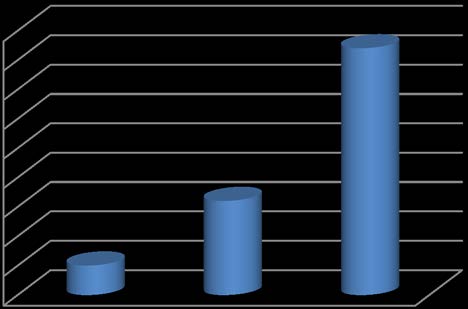
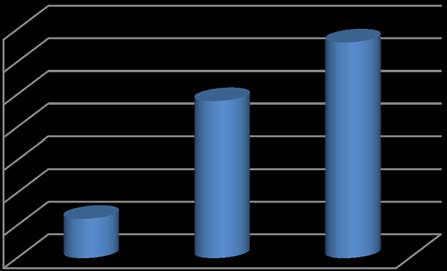
In present study it has been observed that overall prevalence of Chronic Suppurative Otitis media is 6.56%.
Out of this 6.56%, 5.83% were tubotympanic type while 0.72% Were attico antral type.
The literature on prevalence of disease is sparingly available particularly in recent years. Most of studies (table9) are from different ethnic environment background. With the advent of medical sciences, The literature shows peak occurrence of fresh cases of otitis media in different months in different countries (Table10).In America it is in October to April which are winter months in that country. Our study was carried in months of July and August; hence there is high incidence of cases of otitis media during this period.
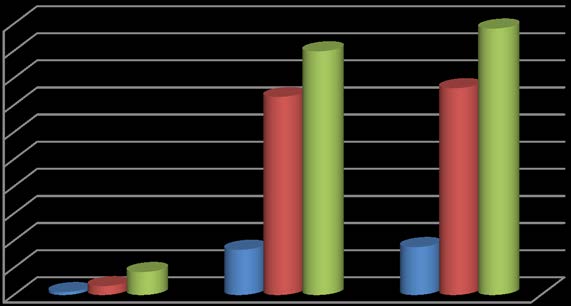
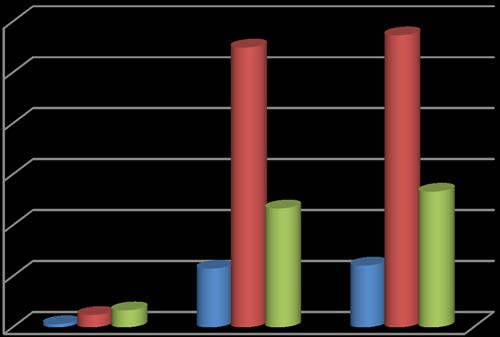
Our study clearly indicates that the socio economic strata and prevalence of chronic suppurative otitis media are inversely proportional to each other.66.66% of cases suffering from Chronic Suppurative Otitis Media were from lower economic strata while only 7.93% of total cases of Chronic suppurative otitis media were from upper economic strata.
Our study indicates that level of sanitation has a major role to play in prevalence of chronic suppurative otitis media.
Level of sanitation is inversely proportional to prevalence of the disease.52.38% of total cases were having poor sanitation while 38.09%wwere having moderate sanitation. On the other hand only 9.52% of cases had good sanitation. Our subjects were mainly Both studies of Rupa et al 5,6 in 1997and 1999 show prevalence of 7.4%and 6% .These studies were based on rural population in remote areas of Tamil Nadu.
However prevalence rate in our study matches with prevalence rate of Motta et al 7 (1993)2% at Cairo-Egypt, Minja et al 8 (1996)2.6%inTanzania, Pal et al 9 (1974)3.5%at Lucknow-India but none of above studies were carried out by taking samples directly from society.
Almost all of them are hospital based studies. However they give information regarding magnitude of disease.
school going children of rural setup hence there level of sanitation was bound to be low.
Our studies also indicates that prevalence of chronic suppurative otitis media was more in male(60.31%) than in female(39.68%).This is because level of sanitation among girls was better than boys in our study.
VII.
11. Conclusion
1. The overall prevalence of chronic suppurative otitis media in school going children between 5 years to 10 years in rural setup of Wardha district was found to be 6.56% 2. Out of this 5.83% were safe type while 0.72% was unsafe type. 3. Association of chronic suppurative otitis media with low socio economic strata was found to be statistically significant. It is more prevalent in low socio economic strata (Chi-square-6.714, Degree of freedom-2, P = 0.034, statistically significant). 4. Association of chronic suppurative otitis media with low level of sanitation was found to be statistically significant. It is more prevalent in children having low level sanitation (Chi-square-20.59, Degree of freedom-2, P < 0.0001, statistically significant) 5. The prevalence of chronic suppurative otitis media was more in male than in female. The reason for this requires further research.
A large group of population suffers from morbidity of otitis media.It is really challenge for health care system .As my study was population based study this data can be of vital importance to planner of health care systems. The paucity of such studied in recent Indian literature speaks out the need of such studies in different parts of the country.
12. VIII.
13. Summary
This study was carried to find out prevalence of Chronic Suppurative Otitis Media among primary school children of rural setup in Wardha District. In addition to it it aimed to inform expert doctors about cases of C.S.O.M and helping patients with treatment. C.S.O.M being global disease and important health problem in our country was chosen for research.
A descriptive, cross sectional materialistic study of 1000 students of age group from 5-10 from primary school of villages in Wardha district were studied. Proforma was prepared to carry out study. Cases of C.S.O.M. wer referred to our hospital where they were examined by our expert doctors and were given proper treatment.
The overall prevalence of C.S.O.M in school going children was 6.56%.Out of this 5.83% were safe(Tubotympanic)type while 0.72% were unsafe(attico antral) type.It had inverse relation with economic strata and level of sanitation.66.66% of lower socio economic strata and 52.39% were suffering from C.S.O.M. There was male predominance. Reason for it requires further study.
The magnitude of problem and its prevalence of Chronic Suppurative Otitis Media in our country depict a need of more studies in different parts of country

| strata with Rural:Urban ratio of 2:1(65%:35%)Unhygienic |
| condition, poverty,illiteracy,malnutrition have also been |
| suggested as a basis of wide spread prevalence of |
| C.S.O.M..It proved out to be helpful for a comparative |
| study of cases of C.S.O.M between male and female in |
| my study.The study was related to our study as my |
| study aimed at finding prevalence of C.S.O.M. in school |
| children of different economic strata, different level of |
| sanitation in rural setup of Wardha. |
| In 1997 Dr H.c. Rushton et al studied |
| prevalence of otitis media with effusion in multicultural |
| schools in Hong kong.In this study 177 students from |
| multicultural schools between 5years to 7 years were |
| studied with otoscopy.It was found that Chinese children |
| had a significant lower prevalence (1.3%)than Cauc- |
| asian children(9.5%).III. Aim & Objectives |
| Indian Journal of otology in MARCH 1999 |
| published work of Dr Arsi Saad. He studied Micro- |
| biological evaluation and management of Chronic |
| Suppurative Otitis Media among Saudi children. Study |
| showed that medical management in children with dry |
| mopping and topical antibiotics was effective in |
| controlling otorrhea and minimizing the referrals for |
| surgery. This basis was used for treatment of children |
| detected with C.S.O.M. It also guided with careful |
| selection of local and systemic antibiotics guided by |
| culture and sensitivity to avoid resistance to community |
| used systemic antibiotics. It also suggested use of local |
| frequent ear toilet as an effective treatment modality. It |
| proved out to be very useful for selecting management |
| of students diagnosed with C.S.O.M. |
| Dr Gulati and Dr Sudesh kumar in Indian |
| Journal of otology in June 1997 suggested that |
| prevalence of C.S.O.M .was found more in male (61%) |
| than in females (39%).It also suggested that majority of |
| cases belonged to lower and middle socio economic |
| Age of students | Number of students |
| 5 years | 73 |
| 6 years | 157 |
| 7 years | 131 |
| 8 years | 181 |
| 9 years | 161 |
| 10 years | 257 |
| 56 7 | |||
| 597 | |||
| CSOM Cases | Normal Cases Total | ||
| Upper | 5 | 83 | 88 |
| Middle | 16 | 365 | 381 |
| Lower | 42 | 449 | 491 |
| CSOM Cases | Normal | Total | |
| Good | 6 | 115 | 121 |
| Moderate | 24 | 549 | 573 |
| Bad | 33 | 233 | 266 |
| Upper | 5 | 7.93 |
| Middle | 16 | 25.39 |
| Lower | 42 | 66.66 |
| Good | 6 | 9.52 |
| Moderate | 24 | 38.09 |
| Bad | 33 | 52.38 |
| Age of students | Number of students suffering from C.S.O.M |
| 5 | 0 |
| 6 | 1 |
| 7 | 3 |
| 8 | 19 |
| 9 | 19 |
| 10 | 21 |
| Year Country | Worker | Prevalence | |
| 1965 | British Columbia Canada | K.Cambon | 15.50% |
| 1970 | Alaska-North America | Dwaynee Reed et al 15% | |
| 1985 | Pohenpi-Island in Pacific Ocean G Dever et al | 3.97% | |
| 1993 | Cairo,Egypt | Motta et al | 2% |
| 1996 | Tanzania,Africa | Manja BM et al | 2.60% |
| 1985 | Korea | Noh et al | 6.24% |
| 1991 | Malaysia | Elango | 4.36% |
| 1993 | Saudi Arabia | H.Mohammad | 1.50% |
| !961 | Lucknow(U.P)India | R.N.Mishra et al | 14.65% |
| 1965 | Vellore south India | Kapur Y.P | 7.43% |
| 1974 | Madurai South India | Rajendrakumar P.V | 69.70% in patients of ear complaints |
| 1974 | Lucknow(UP) India | Pal et al | 3.59% |
| 1997 | South India | Rupa et al | 7.74% |
| 1999 | South India | Rupa et al | 6% |
| 2000 | Yavatmal Maharashtra India | P.T Wakode et al | 3% |
| Year Worker | Country | Month | |||
| 1940 | Heller | George | and | America | October and April |
| Englewood | |||||
| 1969 | Robert Brownlee et al | America | March | ||
| 1970 | Dwaynee Reed et al | Alaska,America March and July | |||
| 1979 | Jerome o klein | America | October to March | ||
| 1982 | Pulender J.Coworkers | Finland | January | ||
| 1996 | Riquelme Parez.M | Spain | February | ||
| 2000 | P.T Wakode et ai | India | July and October | ||