
Aflatoxin Risk in Dairy Production: Assessment of Dairy Cattle Feed Contamination Level by Aspergillus Flavus and A. Parasiticus in both Conventional and Traditional Dairies
Keywords:
Abstract
Contamination of dairy cattle feeds by aflatoxigenic Aspergillus group, poses public health challenges as a result of high chances of aflatoxicosis. In this study, therefore, dairy cattle feed samples (n=144) collected from both conventional and traditional dairies were examined for the presence of aflatoxigenic strains of Aspergillus flavus and Aspergillus parasiticus using microbiological and molecular techniques. Fungal Colonial counts (CFU) were determined, and the mean CFU/g of the feed samples was 3.8 ± 0.47. A Significant number of the feeds, 86 (59.7%) showed positive contamination level, out of which 55.8% and 18.6% (representing 33.3% and 8.3% of the total dairy cattle feed samples collected) were contaminations due to Aspergillus flavus and Aspergillus parasiticus respectively. All the 64 isolates of the A. flavus and A. parasiticus were examined for aflatoxin producing abilities under a long UV light (365 nm). Aflatoxin production levels were quantitatively determined using ELISA technique and 16 isolates representing 25.0% of the total isolates; in the ratio of 3:1 respectively, showed a varied level of production of aflatoxins.
Downloads
- Article PDF
- TEI XML Kaleidoscope (download in zip)* (Beta by AI)
- Lens* NISO JATS XML (Beta by AI)
- HTML Kaleidoscope* (Beta by AI)
- DBK XML Kaleidoscope (download in zip)* (Beta by AI)
- LaTeX pdf Kaleidoscope* (Beta by AI)
- EPUB Kaleidoscope* (Beta by AI)
- MD Kaleidoscope* (Beta by AI)
- FO Kaleidoscope* (Beta by AI)
- BIB Kaleidoscope* (Beta by AI)
- LaTeX Kaleidoscope* (Beta by AI)
How to Cite
References
M. Abarca, M. Bragulat, M. Bruguera, F. Cabanes (1988) Comparison of some screening methods for aflatoxigenic moulds. 104(2), 75-79. https://doi.org/10.1007/bf00436930
Hamed Abbas, Robert Zablotowicz, H. Bruns, Craig Abel (2006) Biocontrol of aflatoxin in corn by inoculation with non-aflatoxigenic Aspergillus flavus isolates Biocontrol Sci. 16(5), 437-449. https://doi.org/10.1080/09583150500532477
Samir Abbès, Jalila Salah-Abbès, Hakimeh Sharafi, Rania Jebali, Kambiz Noghabi, Ridha Oueslati (2013) Ability ofLactobacillus rhamnosusGAF01 to remove AFM1in vitroand to counteract AFM1immunotoxicityin vivo. 10(3), 279-286. https://doi.org/10.3109/1547691x.2012.718810
M. Ajala (2004) Household decision making in the production of small ruminants in Giwa LGA of Kaduna State of Nigeria. 399-402.
O. Atanda, M. Ogunrinu, F. Olorunfemi (2011) A neutral red desiccated coconut agar for rapid detection of aflatoxigenic fungi and visual determination of aflatoxins. 4(2), 147-155. https://doi.org/10.3920/wmj2010.1241
S. Bandh, A. Kamili, A. Bashir (2012) Identification of some Aspergillus species isolated from Dal Lake, Kashmir by traditional approach of morphological observation and culture. 6(29), 5824-5827.
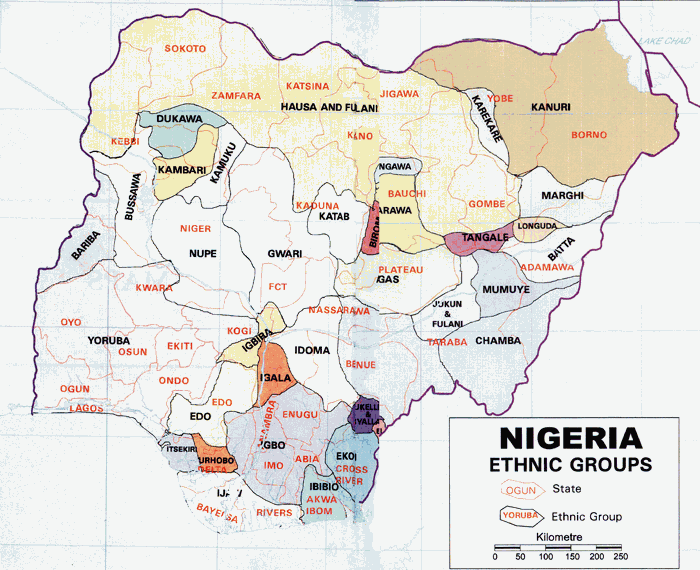
Canback (C-GIDD) (2008) Canback Global Income Distribution Database (C-GIDD), 2008. http://www.onlinenigeria.com/map.gif
Perng-Kuang Chang, Christopher Skory, John Linz (1992) Cloning of a gene associated with aflatoxin B1 biosynthesis in Aspergillus parasiticus. 21(3), 231-233. https://doi.org/10.1007/bf00336846
G. Criseo, A. Bagnara, G. Bisignano (2001) Differentiation of aflatoxin-producing and non-producing strains of Aspergillus flavus group. 33(4), 291-295. https://doi.org/10.1046/j.1472-765x.2001.00998.x
J. Dorner, R. Cole (2002) Effect of application of nontoxigenic strains of Aspergillus flavus and A. parasiticus on subsequent aflatoxin contamination of peanuts in storage. 38, 329-339.
Joe Dorner, Richard Cole, Donald Wicklow (1999) Aflatoxin Reduction in Corn Through Field Application of Competitive Fungi. 62(6), 650-656. https://doi.org/10.4315/0362-028x-62.6.650
Rolf Geisen (1996) A multiplex polymerase chain reaction for the detection of potential aflatoxin and sterigmatocystin producing fungi Systematic and Appl. 19(3), 388-392. https://doi.org/10.1016/s0723-2020(96)80067-1
A. Gonzalez-Salgado, T. Gonzalez-Jaen, V. Covado- nga, B. Patino (2008) Highly sensitive PCR-based detection method specific to Aspergillus flavus in wheat Food Add. 25(6), 758-764.
M. Hedayati, A. Pasqualotto, P. Warn, P. Bowyer, D. Denning (2007) Aspergillus flavus: human pathogen, allergen and mycotoxin producer. 153(6), 1677-1692. https://doi.org/10.1099/mic.0.2007/007641-0
S. Ibrahim, M. Rahma (2009) Isolation and indentification of fungi associated with date fruits (Phoenix dactylifera, Linn) sold at Bayero University, Kano, Nigeria. 2(2), 127-130.
G. James, S. Natalie (2001) Microbiology. A laboratory Manual. 211-223.
Larone DH (1995) Medically Important Fungi. A Guide to Identification.
R. Latha, H. Manonmani, E. Rati (2008) Multiplex PCR assay for the detection of aflatoxigenic and non-aflatoxigenic Aspergilli. 3(3), 136-142.
Biing-Hui Liu, Fun Chu (1998) Regulation of aflR and its prod-uct, AflR, associated with aflatoxin biosynthesis Appl Environ. 64(10), 3718-3723. https://doi.org/10.1128/aem.64.10.3718-3723.1998
Mycology-Critique (2004) Mycology proficiency testing program. 7-15.
G. Naidoo, A. Forbes, C. Paul, D. White, T. Rocheford (2002) Resistance to Aspergillus Ear Rot and Aflatoxin Accumulation in Maize F Hybrids. 42(2), 360. https://doi.org/10.2135/cropsci2002.0360
M. Rashid, S. Khalil, N. Ayub, W. Ahmed, A. Khan (2008) Characterization of Aspergillus flavus and Aspergillus parasiticus isolates of stored wheat grains in to aflatoxigenics and non-aflatoxigenics Palc J. 40(5), 2177-2192.
Mam Romo, Cartagena, MCR, Ferri, EFR, G. Fernández (1986) Minimal moisture content for growth and aflatoxin production by Aspergillus parasiticus in mixed feeds. 95(3), 145-148.
M. Saghai-Maroof, K. Soliman, R. Jorgensen, R. Allard (1984) Ribosomal DNAsepacer-length polymorphism in barley: Mendelian inheritance, chromosomal location, and population dynamics. 81, 8014-8019.
D. Somashekar, E. Rati, A. Chandrashekar (2004) PCR-restriction fragment length analysis of aflR gene for differentiation and detection of Aspergillus flavus and Aspergillus parasiticus in maize. 93(1), 101-107. https://doi.org/10.1016/j.ijfoodmicro.2003.10.011
Published
2019-04-16
Issue
Section
License
Copyright (c) 2019 Authors and Global Journals Private Limited

This work is licensed under a Creative Commons Attribution 4.0 International License.